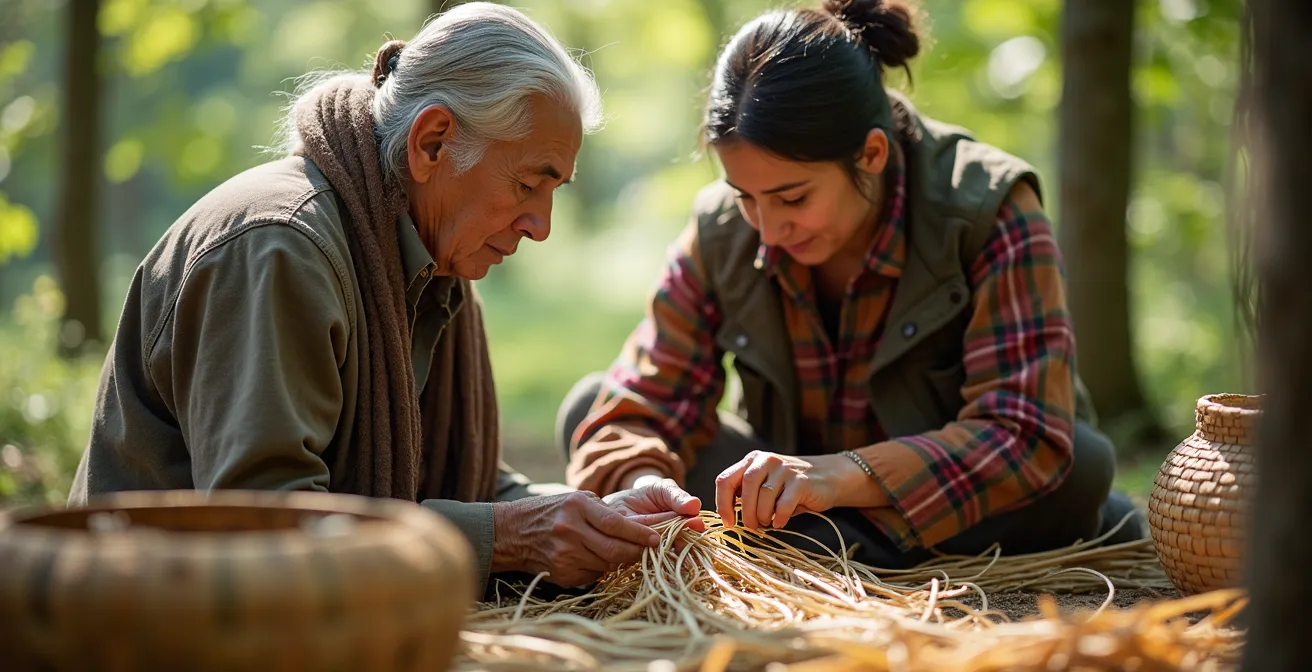
Authentic travel is not about seeing sites, but about meaningful engagement; it requires shifting from a passive consumer to an active participant in local culture.
- Most commercialized experiences, like many tourist luaus, often misrepresent the culture they claim to honor for profit.
- Genuine support comes from intentional spending at vetted, community-approved sources, such as artisan guilds or locally-owned businesses.
Recommendation: Before your next trip, research one “third place”—a local club, workshop, or community hub—and plan to visit, prioritizing participation over observation.
For the conscious traveler, the question “How to experience Native American heritage respectfully?” opens a door to a much larger challenge: How do we engage with any culture authentically, without turning it into a mere commodity? Many of us have felt the hollowness of a “tourist experience”—a performance that feels more like a caricature than a genuine cultural expression. We’ve bought souvenirs that we suspect were mass-produced, and we’ve walked away from historical sites feeling like we only skimmed the surface. The common advice—visit a reservation, go to a powwow—is a starting point, but it often lacks the crucial “how” and “why.”
The desire to connect is real, but the path is often obscured by commercialism. This is true whether we’re considering Hawaiian traditions, Appalachian crafts, or the soul of New Orleans jazz. The fundamental mistake is viewing culture as a product to be consumed. The truth is that authenticity isn’t found in a transaction; it’s built through interaction, respect, and a genuine curiosity that goes beyond the superficial. It’s about understanding the difference between cultural appreciation, which honors and supports, and cultural appropriation, which trivializes and exploits.
But if the typical tourist path is a dead end, what’s the alternative? The answer lies in a mindset shift: from spectator to participant. This guide will provide a framework for this shift. We will deconstruct common tourist traps, explore how to become a source of economic stewardship for local communities, understand that history is a living narrative, and discover how genuine human connection is the ultimate travel souvenir. We will see how these principles apply everywhere, from the mountains of Kentucky to the stages of Coachella, transforming your journey into a meaningful cultural exchange.
For those who prefer a visual introduction, the following documentary explores how one indigenous group, Pamyua, navigates the path of sharing their culture authentically with the world, a theme central to our guide.
This article is structured to guide you from understanding the problem to implementing practical solutions. We will explore how to identify and avoid inauthentic experiences, how to directly support local artisans and communities, and how to engage with history and culture on a deeper, more human level.
Summary: A Guide to Authentic Cultural Engagement in America
- Why Most “Luau” Shows in Hawaii Fail to Represent Real Polynesian Culture?
- How to Support Local Appalachian Artisans Without Buying Mass-Produced Souvenirs?
- Volunteer or Visit: Which Approach Helps Struggling Rural Communities More?
- The 4 Civil Rights Landmarks That Teach More Than Any Museum Textboard
- When to Visit New Orleans to See Real Jazz Culture Beyond Mardi Gras?
- How to Make Genuine American Friends Beyond Surface-Level Acquaintances?
- Why Buying Shuttle Passes Saves You 3 Hours Per Day at Major Festivals?
- How to Attend Coachella or Burning Man on a “Normal Person” Budget?
Why Most “Luau” Shows in Hawaii Fail to Represent Real Polynesian Culture?
The commercial luau is a perfect case study in cultural distortion. It promises an authentic Hawaiian feast and performance but often delivers a diluted, pan-Polynesian spectacle designed for mass consumption. These events are a significant part of an industry where Hawaii’s tourism industry generated $20.68 billion in visitor spending in 2024 alone. With such immense financial pressure, authenticity often takes a backseat to profitability. The sacredness of hula, the specific histories behind the chants, and the true meaning of the feast are frequently simplified or altered to be more palatable and entertaining for a tourist audience.
The issue isn’t the performance itself, but the lack of context and the misrepresentation. Many shows blend traditions from Tahiti, Samoa, and Fiji with Hawaiian elements, presenting them as a single, homogenous “Polynesian” identity. This erases the unique and distinct heritage of each island nation. A real luau is a family and community event, often celebrating a significant milestone like a birth or graduation. It’s about community connection, shared history, and specific protocols, not a fire-knife dance finale that, while spectacular, is Samoan in origin, not traditionally Hawaiian.
To find a more genuine experience, the key is to look for smaller, community-run events or cultural centers dedicated to preservation over profit. Seek out opportunities to learn from cultural practitioners, attend a hula hālau (school) presentation, or visit a place like the Bishop Museum. The goal is to shift from being a passive audience member at a large-scale show to an active learner in a context where the cultural integrity is the priority. It requires more research, but the reward is a connection that is far more real than any staged performance.
How to Support Local Appalachian Artisans Without Buying Mass-Produced Souvenirs?
Moving from a passive consumer to a conscious supporter is most tangible when it comes to souvenirs. Appalachia, a region rich with a history of craftsmanship, from quilting to pottery and woodworking, faces a flood of mass-produced trinkets that mimic traditional styles. Buying these items not only devalues the skill of true artisans but also diverts money from the local communities that desperately need it. The solution is to practice economic stewardship: intentionally directing your dollars to people and systems that preserve cultural heritage and ensure fair compensation.
Instead of browsing generic gift shops, seek out vetted craft trails and guilds. These organizations act as curators, guaranteeing that the work you purchase is authentic and that the artist receives the majority of the profit. This approach directly fuels the local economy, which is vital for a region where, in Kentucky alone, the tourism industry achieved a record $14.3 billion economic impact and supported nearly 100,000 jobs. By purchasing from a juried artisan, you are not just buying an object; you are investing in the continuation of a cultural lineage.
This is where programs designed to connect travelers directly with creators become invaluable. They transform the act of shopping into a cultural exchange.
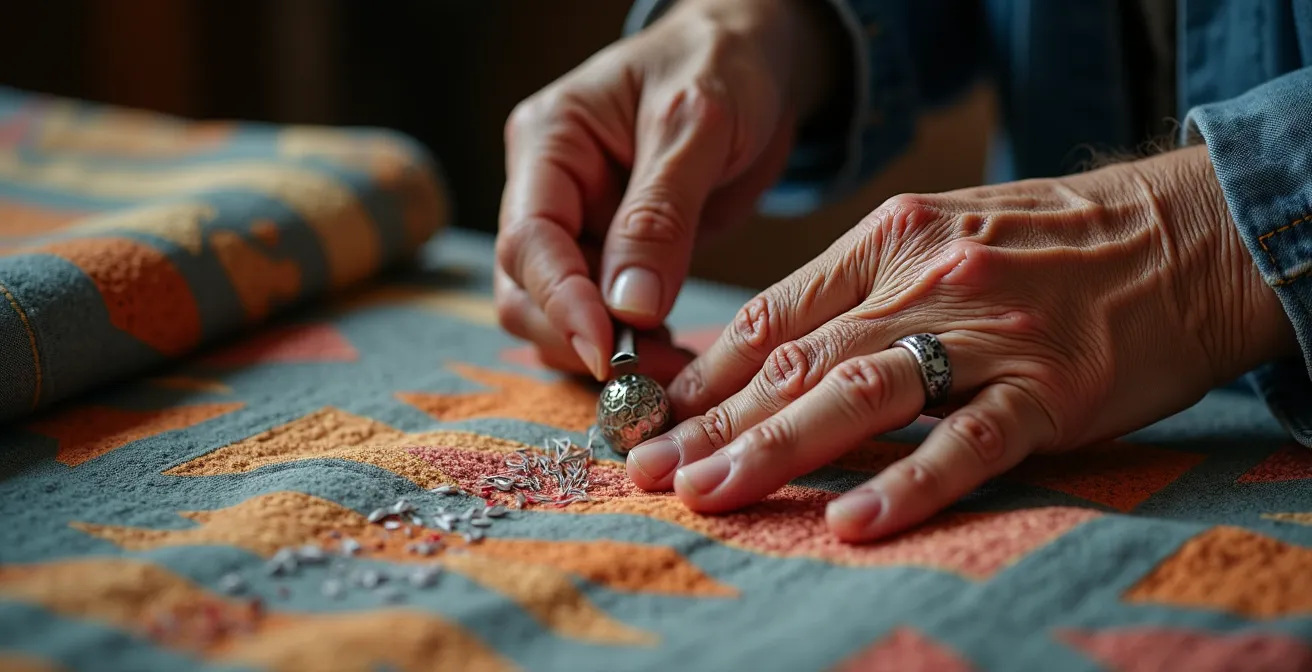
Engaging with artisans in their workshops, attending craft schools for a day, or visiting curated fairs allows you to hear the stories behind the work and understand the generations of knowledge woven into each piece. This model provides a sustainable income for craftspeople, preserving skills that might otherwise be lost.
Case Study: The Southern Highland Craft Guild Model
The Southern Highland Craft Guild’s curated craft fairs and Kentucky’s Artisan Trail represent vetted systems that guarantee authenticity and fair payment to artists. These programs have contributed to Appalachia’s tourism economy, with most of the region’s 420 counties now incorporating artisan tourism as part of their economic development strategy, creating sustainable income streams for traditional craftspeople while preserving cultural heritage.
Volunteer or Visit: Which Approach Helps Struggling Rural Communities More?
The desire to “give back” while traveling often leads to the idea of voluntourism. While noble in intention, dropping into a community for a short period to perform unskilled labor can sometimes be more of a burden than a help. It can cost the community precious resources in training and supervision, and the work done is often temporary. A more sustainable and often more impactful approach is to be a thoughtful visitor, one who contributes through mindful spending and respectful engagement. This empowers the community by providing unrestricted cash flow to local businesses they themselves own and operate.
The key difference lies in agency and sustainability. When you pay for a locally guided tour, eat at a family-owned restaurant, and buy from a local artisan, you are affirming the community’s economic model. You are a customer, not a savior, which is a far more dignified and empowering relationship. This approach builds a sustainable tourism economy that is controlled by the community, for the community. The exception is skill-based exchange, where a traveler with specific, requested expertise (like a doctor, engineer, or web developer) can fill a genuine, identified need.
The following comparison breaks down the real-world impact of these different approaches, showing how thoughtful tourism can often be the most beneficial form of support. As an analysis on tourism development shows, direct economic impact and community control are critical factors.
| Approach | Direct Economic Impact | Community Control | Long-term Benefits |
|---|---|---|---|
| Thoughtful Visitor | Unrestricted cash flow to local businesses | Full community control of resources | Builds sustainable tourism economy |
| Unskilled Volunteer | Often costs community resources | External organization controls agenda | Limited lasting impact after departure |
| Skill-Based Exchange | Addresses specific identified needs | Community-requested assistance | Transfers valuable expertise |
Ultimately, the most helpful question to ask is not “How can I help?” but “What does this community offer that I can respectfully and joyfully support?” This places the value and expertise within the community itself, fostering a relationship built on mutual respect rather than perceived need.
The 4 Civil Rights Landmarks That Teach More Than Any Museum Textboard
History is not static; it is a living, breathing narrative carried by people and places. While museums are essential, some stories are best understood by standing on the ground where they unfolded and listening to those who carry the memories. The American Civil Rights Movement is one such story. To truly connect with its legacy, one must go beyond text on a wall and seek out the “living history” that still resonates in these communities today. Four key landmarks offer this profound level of engagement:
- The Edmund Pettus Bridge in Selma, Alabama: More than a structure, it’s a stage for living testimony.
- The National Memorial for Peace and Justice in Montgomery, Alabama: A space for somber reflection on the history of racial terror.
- The 16th Street Baptist Church in Birmingham, Alabama: A site of tragic loss but also of enduring community resilience.
- The Lorraine Motel in Memphis, Tennessee: The site of Dr. King’s assassination, now the National Civil Rights Museum, which powerfully connects the past to the present.
What makes these places more than monuments is the community that surrounds them. The real education happens when a visit is combined with engagement. This means seeking out local guides, visiting the churches that were the organizing hubs of the movement, and supporting the Black-owned businesses that are the economic legacy of the fight for equality.
Case Study: Experiencing Living History at the Edmund Pettus Bridge
The Edmund Pettus Bridge in Selma offers more than historical markers. As highlighted in guides to experiencing American culture authentically, local churches and community organizations can provide access to march participants who share firsthand accounts. These living testimonies, combined with visits to nearby Black-owned businesses and restaurants, transform the site from a static monument into an active catalyst for understanding both historical and contemporary civil rights issues, including modern food desert challenges in the same communities.
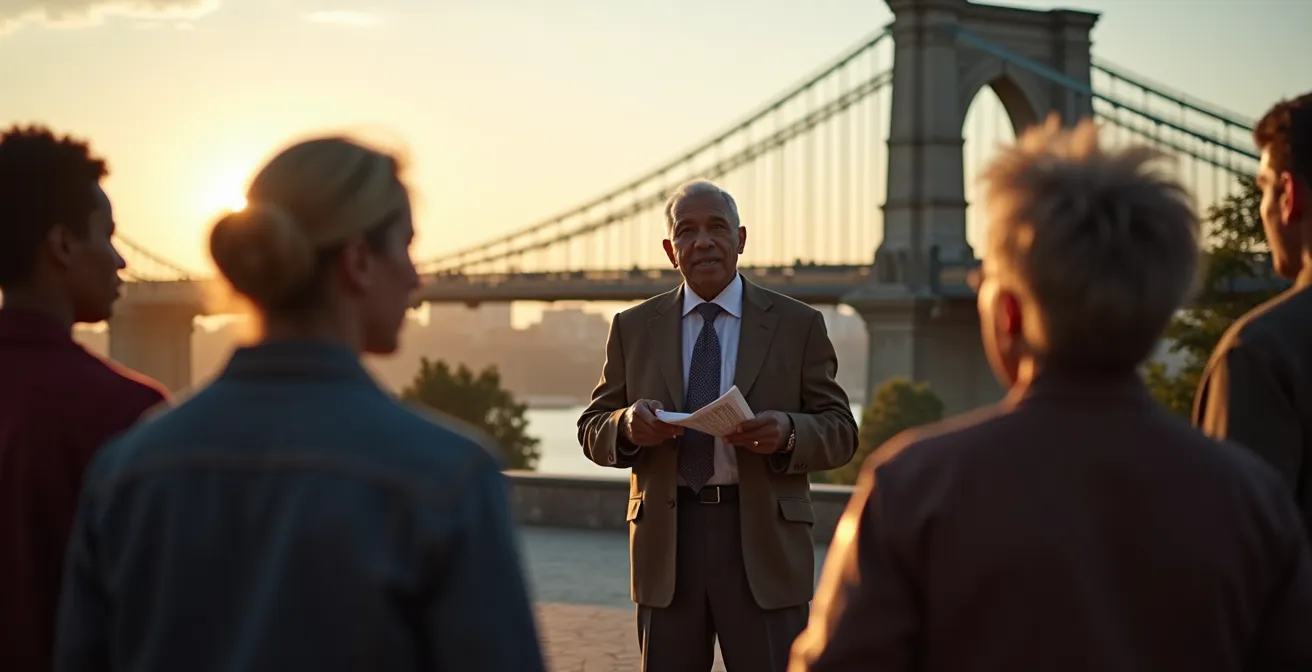
By engaging this way, a traveler is no longer just a spectator of history. You become a witness, listening to the oral traditions that give these landmarks their soul. This is the essence of connecting with living history—it’s understanding that the past is not over; it is actively shaping the present.
When to Visit New Orleans to See Real Jazz Culture Beyond Mardi Gras?
New Orleans is synonymous with music, but the vibrant, improvisational soul of its jazz scene is often overshadowed by the tourist-centric chaos of Mardi Gras and the polished performances on Bourbon Street. To experience the city’s true musical heartbeat, you must venture beyond the main drags and visit during a time when the music is played for locals, not just for tourists. The best times are often during the “shoulder seasons” of fall and early spring, outside of major festival dates.
The key is to seek out the neighborhood clubs on Frenchmen Street in the Faubourg Marigny, or even further afield in venues like the Maple Leaf Bar in the Carrollton neighborhood. This is where the living tradition of jazz thrives. Here, the music is a conversation between the musicians and an engaged audience, a dynamic interplay that is lost in the noisy, transactional environment of a Bourbon Street bar. Attending a show in one of these clubs is an act of participation in the city’s living culture.
This sentiment is echoed by those who know the culture best. As the American Indian Alaska Native Tourism Association’s guidelines suggest, genuine culture is found where the community gathers. The same principle applies directly to the music of New Orleans. In a statement reflecting the views of the city’s artists, the consensus is clear. As one local musician community group put it:
The true heartbeats of the city’s music scene are found in neighborhood bars, not tourist venues
– Local Jazz Musician Community, AIANTA Cultural Tourism Guidelines
To find these places, talk to locals—the hotel bartender, the record store clerk, or even the musicians themselves between sets. Ask where they go to listen to music. This simple question can unlock the door to an authentic experience, transforming a night out from a simple performance into a genuine immersion in the sonic soul of New Orleans.
How to Make Genuine American Friends Beyond Surface-Level Acquaintances?
The deepest form of cultural immersion comes from genuine human connection. But for a traveler, moving beyond polite, surface-level conversations with service staff to forming real friendships can seem impossible. The secret lies in understanding the concept of “third places.” These are the social environments outside of home (the first place) and work (the second place) where community is built. For a traveler, intentionally placing yourself in these environments is the fastest way to foster organic connections.
Third places are settings of regular, informal, and voluntary gathering. Think of a weekly running club, a neighborhood pub’s trivia night, a community garden, a local sports league, or a book club. Unlike a one-off tour, these activities provide the consistency needed for relationships to develop naturally. You’re no longer a “tourist” but a fellow participant, sharing a common interest. This shared context removes the pressure of forced conversation and allows friendships to grow from a place of mutual enjoyment.
Case Study: The Power of Third Places in Building Friendships
Research on community building consistently shows that “third places” like running clubs, weekly trivia nights, and volunteer groups provide the ideal low-pressure environment for friendship. Participants in these regular activities report forming deeper connections within 3-6 months compared to typical workplace relationships. The voluntary nature and shared interests act as a powerful social glue, creating bonds that are authentic and lasting.
Finding these places requires a little pre-trip research on sites like Meetup, local community center websites, or city-specific Facebook groups. Once you’re there, the next step is turning a pleasant chat into a potential connection. This often requires taking a small, vulnerable step to extend the interaction. The following checklist provides simple, low-risk ways to do just that.
Your Action Plan for Building Genuine Connections
- After an initial meeting: “Great chatting about hiking. I’m checking out [Trail Name] this weekend, let me know if you’d like to join.”
- Following a group event: “Really enjoyed trivia last night. Same time next week?”
- Building on a shared interest: “You mentioned loving that coffee shop – want to grab a cup there Thursday?”
- Opening with vulnerability: “Hey, you know the area well – where’s the best place to get my bike fixed?”
- Extending a simple invitation: “My neighbor’s having a BBQ Saturday and told me to bring a friend, want to come along?”
Why Buying Shuttle Passes Saves You 3 Hours Per Day at Major Festivals?
Even in the hyper-commercialized environment of a massive festival like Coachella or Burning Man, the principles of mindful travel apply. Here, the choice is not about finding ancient culture but about optimizing for the most valuable resource: time and energy for connection. One of the biggest drains on this resource is transportation. Relying on rideshares or personal vehicles often leads to hours wasted in traffic, searching for parking, or waiting for a car during peak surge pricing.
The official festival shuttle pass, often overlooked as an unnecessary expense, is actually a strategic tool for maximizing your experience. Shuttles operate on dedicated routes, bypassing much of the general traffic. This logistical advantage translates directly into more time spent enjoying the festival and less time stressing in a gridlock. The time saved is significant—often two to three hours per day compared to the uncertainty and delays of other options.
But the benefit extends beyond mere logistics. The shuttle becomes a mobile “third place,” an unofficial first stage of the festival. It’s a shared space where you are surrounded by fellow attendees, creating an immediate sense of community. Conversations spark, friendships begin, and the collective excitement builds. It transforms a frustrating commute into a positive, shared experience. The cost-benefit analysis becomes clear when you factor in not just money, but the irretrievable loss of time and potential for stress.
This table breaks down the true cost of each transportation method over a typical three-day festival weekend.
| Transport Option | 3-Day Festival Cost | Time Lost Daily | Additional Factors |
|---|---|---|---|
| Shuttle Pass | $150 fixed | 30 minutes | Peace of mind, community building |
| Rideshare (peak) | $300-450 | 2-3 hours waiting | Surge pricing, availability issues |
| Personal Vehicle | $100 parking + gas | 1.5 hours | DUI risk, finding parking |
Key takeaways
- Authentic travel is a mindset focused on participation and contribution, not consumption.
- Support local economies directly by seeking out vetted artisans, community-run events, and family-owned businesses.
- History is often best understood as a “living narrative” by engaging with the people and communities that carry its stories.
How to Attend Coachella or Burning Man on a “Normal Person” Budget?
Attending a major festival can seem like a luxury reserved for the wealthy, with ticket, travel, and on-site costs quickly spiraling into the thousands. However, by applying the core principles of participation and community, it is entirely possible to experience these iconic events on a realistic budget. The key is to trade passive consumption for active involvement and strategic planning. Instead of simply buying your way in, you contribute to the ecosystem of the event.
The most significant way to reduce costs is by volunteering. Official programs, like the Work Exchange Team (WET) at Coachella, often provide a full festival pass in exchange for a set number of work hours. This not only eliminates the single largest expense but also immerses you into the festival’s inner workings and introduces you to a dedicated community of fellow volunteers. It’s the ultimate shift from spectator to active participant. Beyond volunteering, a communal approach to lodging and supplies drastically cuts costs. Sharing a larger campsite or Airbnb with a group and cooking communal meals can reduce daily expenses by over 70% compared to relying on expensive on-site food vendors.
This strategy is about being resourceful and prioritizing experience over convenience. It requires more planning, but the reward is not just financial savings; it’s a richer, more connected, and arguably more authentic festival experience. The following strategy checklist outlines the most effective tactics for budget-conscious attendance:
Your Budget Festival Attendance Strategy
- Apply for official volunteer programs (e.g., WET for Coachella) to eliminate ticket costs.
- Source camping gear from secondhand marketplaces like Craigslist and Facebook Marketplace to save 60-70%.
- Form groups of 4-6 people to share the costs of larger Airbnbs or campsites.
- Choose lodging 20-30 miles from the venue along official shuttle lines for up to 50% savings.
- Buy groceries for communal meals instead of relying on on-site food, reducing daily food costs from $100+ to around $30.
Ultimately, whether you are walking the Civil Rights Trail, tapping your foot in a New Orleans jazz club, or setting up a tent at a festival, the path to a more authentic experience is the same. It begins with the decision to look beyond the surface, to engage with respect, and to contribute to the cultures you have the privilege to visit. Apply this framework to your next journey and discover a depth of connection you never thought possible.