Home & decoration
Your home tells a story, and for those bitten by the travel bug, that story often weaves together memories from distant lands, encounters with different cultures, and the aesthetics that moved you during your journeys. Travel-inspired home decoration isn’t merely about placing a souvenir on a shelf—it’s about creating an environment that reflects your experiences, celebrates cultural diversity, and keeps the spirit of exploration alive in your everyday surroundings.
The intersection of travel and interior design offers endless possibilities for personal expression. Whether you’re drawn to the minimalist elegance of Scandinavian spaces, the vibrant warmth of Mediterranean homes, or the intricate patterns of Moroccan interiors, incorporating global design elements allows you to craft a living space that feels both authentically yours and beautifully worldly. This approach to decoration transforms your home into a curated collection of experiences rather than just a collection of objects.
Why Travel and Home Decoration Naturally Connect
The relationship between travel and home decoration runs deeper than aesthetics. When we travel, we engage our senses in heightened ways—noticing colors, textures, spatial arrangements, and design philosophies that differ from our everyday environment. These observations naturally inspire us to rethink our personal spaces.
Travel experiences create emotional anchors that objects can help preserve. A handwoven textile from Peru doesn’t just add color to your living room; it carries the memory of the artisan you met, the mountain village you visited, and the cultural traditions you learned about. This emotional resonance makes travel-inspired decoration fundamentally different from simply following design trends. You’re not decorating to impress others—you’re creating a space that genuinely reflects your journey through life.
Furthermore, incorporating global design elements encourages ongoing curiosity and learning. Each piece in your home can serve as a conversation starter, a teaching moment, or a reminder of perspectives different from your own. In an increasingly interconnected world, a home that celebrates cultural diversity becomes a statement about openness, appreciation, and lifelong learning.
Global Design Styles to Transform Your Space
Understanding different regional design philosophies helps you make intentional choices rather than creating a chaotic mix of unrelated elements. Each global style carries distinct characteristics that can influence entire rooms or simply accent existing decor.
Mediterranean and Coastal Aesthetics
Mediterranean design draws inspiration from countries bordering the sea—Greece, southern Italy, Spain, and coastal Morocco. This style emphasizes natural light, whitewashed walls, and blue accents that mirror sky and water. Terra cotta tiles, wrought iron details, and rustic wood furniture create warmth while maintaining an airy feel. If you’ve fallen in love with seaside villages during your travels, this style recreates that relaxed, sun-drenched atmosphere through material choices and color palettes that feel both timeless and effortlessly elegant.
Scandinavian Simplicity and Functionality
Northern European design philosophy prioritizes function, clean lines, and the concept of hygge—creating coziness and contentment. Characterized by neutral color schemes, natural materials like light woods and wool, and uncluttered spaces, Scandinavian interiors maximize natural light during long winter months. This minimalist approach doesn’t mean cold or impersonal; instead, it creates calm, purposeful environments where each object has meaning and function. Travelers drawn to Nordic countries often bring home this philosophy alongside specific pieces like Finnish textiles or Danish ceramics.
Bohemian and Eclectic Global Fusion
For those who’ve traveled extensively across multiple continents, a bohemian approach allows you to blend diverse elements authentically. This style celebrates pattern mixing, layered textiles, and objects from various cultural traditions coexisting harmoniously. The key to successful bohemian design lies not in random accumulation but in identifying common threads—perhaps a consistent color palette, repeated geometric patterns, or a focus on handcrafted items. This approach requires the most curatorial skill but offers the greatest personal expression.
Asian Minimalism and Zen Principles
Japanese, Chinese, and broader Asian design philosophies often emphasize balance, natural materials, and the intentional use of empty space. Low-profile furniture, sliding screens, indoor plants, and natural wood grains create serene environments that encourage mindfulness. The Japanese concept of wabi-sabi—finding beauty in imperfection and impermanence—particularly resonates with thoughtful travelers. Incorporating these principles doesn’t require transforming your entire home; even small gestures like a carefully placed bonsai, tatami-inspired mats, or shoji-style room dividers can shift the energy of a space.
Bringing Souvenirs Home: Display and Integration Tips
The transition from traveler to curator begins the moment you consider purchasing something abroad. Not every beautiful object will serve your home well, and not every meaningful memory requires a physical representation. Strategic selection and thoughtful display ensure your travel treasures enhance rather than clutter your space.
Selecting Meaningful Over Merely Decorative
Before purchasing any item abroad, consider these practical questions:
- Does this object tell a specific story I want to remember?
- Will this item work with my existing color palette and design style?
- Do I have appropriate space to display this properly?
- Is this item easily transportable, or will shipping costs and logistics create problems?
- Does purchasing this support local artisans and ethical production?
The most successful travel-inspired interiors result from selective curation rather than comprehensive collection. A single, exceptional piece often makes a stronger statement than a dozen smaller items competing for attention.
Display Techniques That Honor the Object
How you display travel treasures significantly impacts their effectiveness as design elements. Grouping similar items by color, material, or region creates visual coherence—for example, displaying multiple ceramics from different countries together emphasizes their craft rather than their geographic diversity. Alternatively, featuring a single significant piece as a focal point gives it the attention it deserves.
Consider the following display approaches:
- Gallery walls: Combine photographs from your travels with small collected items, maps, and cultural artifacts in unified frames
- Shadow boxes: Protect and highlight delicate items like textiles, vintage postcards, or small three-dimensional objects
- Functional display: Use items for their intended purpose—serve meals on hand-painted Portuguese plates, brew tea in a Moroccan pot, or read by the light of a Turkish mosaic lamp
- Rotating exhibits: Keep some items in storage and periodically refresh your displays to prevent visual fatigue and rediscover forgotten treasures
Creating Atmosphere Through Cultural Aesthetics
Beyond individual objects, travel-inspired decoration involves adopting atmospheric elements that define how a space feels. This more subtle approach transforms entire rooms without requiring extensive collections or obvious tourist souvenirs.
Lighting plays a crucial role in establishing cultural atmosphere. The warm, golden glow of Moroccan lanterns creates an entirely different mood than the cool, clear light favored in Scandinavian design. Similarly, scent powerfully evokes place—incense suggesting Asian temples, lavender recalling French countryside, or citrus evoking Mediterranean groves. These sensory elements transport you mentally even when you’re physically at home.
Textile choices also dramatically impact atmosphere. Layering rugs, throws, and pillows with patterns and materials from specific regions creates immersive environments. A Mexican serape draped over a chair, Indian block-printed curtains, or Turkish kilim pillows each contribute distinct cultural signatures. The key is achieving balance—enough pattern and texture to create interest without overwhelming the senses.
Color psychology varies across cultures, and understanding these associations helps you create intentional atmospheres. While white symbolizes purity in Western contexts, it represents mourning in some Asian cultures. Red brings luck and celebration in Chinese tradition but might feel aggressive in large quantities elsewhere. When adopting color palettes from your travels, consider both the cultural significance and your personal emotional response to create spaces that feel both authentic and comfortable.
Practical Considerations for Travel-Inspired Interiors
Successfully implementing global design elements requires balancing aesthetic aspirations with practical realities. Unlike professional designers working with unlimited budgets, most people need to integrate travel-inspired pieces gradually and thoughtfully into existing spaces.
Budget-Friendly Approaches
Travel-inspired decoration doesn’t demand expensive authentic antiques or extensive international shopping trips. Many effective strategies cost little or nothing:
- Repurpose items you already own by viewing them through a cultural lens—perhaps that blue vase becomes part of a Mediterranean scheme
- Print and frame your own travel photography to create personalized, meaningful wall art
- Learn traditional crafts through online tutorials and create your own versions of items that inspired you abroad
- Shop local ethnic markets, import stores, and thrift shops for authentic items at fraction of tourist-destination prices
- Use paint and fabric to transform existing furniture with patterns and colors from your favorite destinations
Maintaining Authenticity While Avoiding Appropriation
As you incorporate cultural elements into your home, approach this practice with respect and awareness. There’s a meaningful difference between appreciation and appropriation. Education and context matter tremendously—understanding the cultural significance of objects you display, supporting artisan communities rather than mass-produced imitations, and avoiding sacred or ceremonial items as mere decoration demonstrates respect.
When friends and family ask about items in your home, being able to share their cultural context, the circumstances under which you acquired them, and what they represent creates opportunities for meaningful exchange rather than superficial exoticism. Your travel-inspired interior becomes a bridge between cultures rather than a collection of trophies.
Evolution Over Time
Your relationship with travel and decoration will naturally evolve. Tastes change, new journeys inspire fresh directions, and living situations shift. Embrace this evolution rather than treating your home as a static museum. The beauty of travel-inspired decoration lies in its flexibility—you can refresh, reimagine, and reinterpret as your life unfolds.
Creating a home that reflects your travels is ultimately about honoring experiences that shaped you while maintaining a functional, comfortable living environment. By thoughtfully selecting meaningful pieces, understanding global design principles, and displaying items with intention, you transform your space into a personal atlas—a constantly evolving map of where you’ve been and what you’ve discovered along the way. Each room becomes an invitation to remember, to dream, and to plan the next adventure.
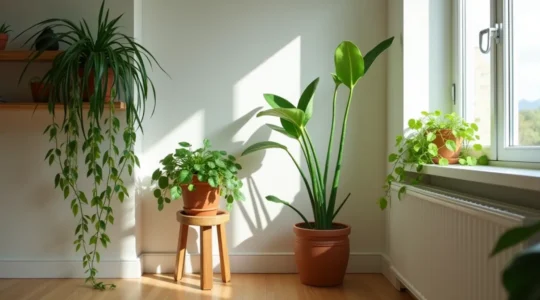
How to Keep Indoor Plants Alive (and Thriving) in a Low-Light Apartment
In summary: Shift your mindset from “keeping a plant alive” to “curating a micro-ecosystem” that benefits both you and your greenery. Mastering the correct watering technique (from the bottom up) is the single most important factor in preventing common pests…
Read more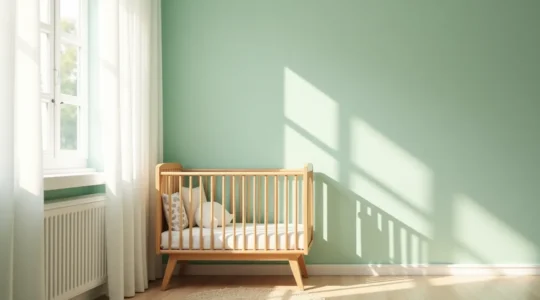
How to Choose Zero-VOC Paints and Materials for a Nursery Renovation?
Creating a genuinely safe nursery environment requires looking far beyond a single can of zero-VOC paint. The most significant health risks come from hidden sources like new carpets, which off-gas for years, and the formaldehyde glues used in common cabinet…
Read more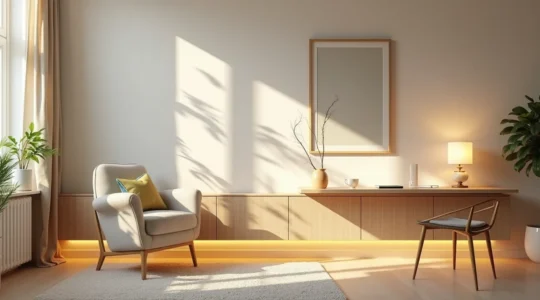
How to Use Feng Shui Principles to Improve Flow in a Small Apartment?
The secret to unlocking flow in a small apartment isn’t just decluttering; it’s mastering the unseen sensory energies of light, sound, and spatial arrangement. Overhead lighting and poor acoustics can create “stagnant energy” that makes a space feel oppressive and…
Read more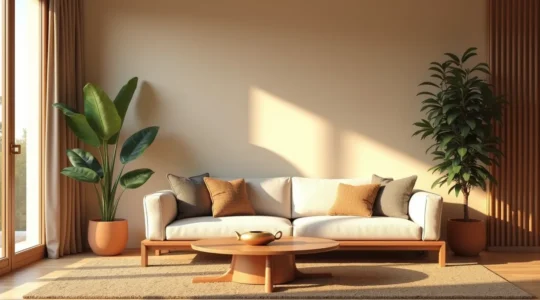
How to Design a Minimalist Living Room That Doesn’t Feel Cold?
Creating a warm minimalist living room isn’t about following a sterile formula; it’s about strategically reducing ‘visual noise’ to lower stress and curate a space with deep emotional resonance. Clutter directly increases cognitive load and stress hormones like cortisol, making…
Read more