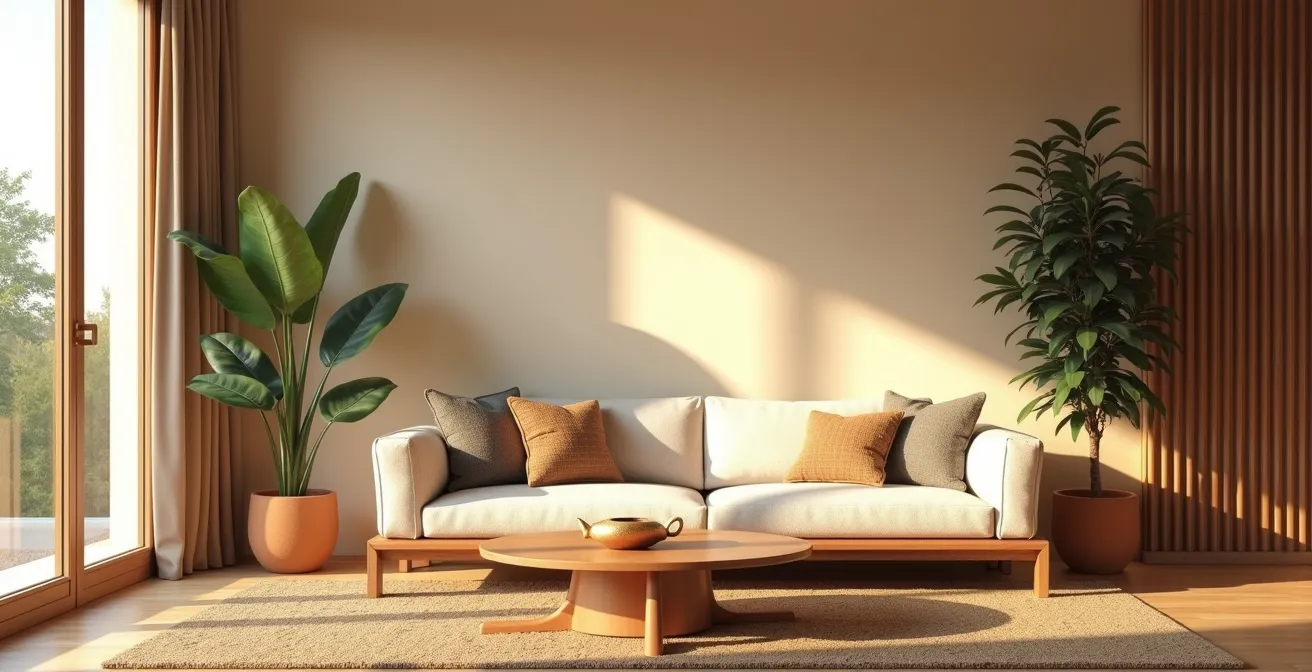
Creating a warm minimalist living room isn’t about following a sterile formula; it’s about strategically reducing ‘visual noise’ to lower stress and curate a space with deep emotional resonance.
- Clutter directly increases cognitive load and stress hormones like cortisol, making your home a source of anxiety rather than peace.
- Warmth comes from intentional choices: tactile textures, meaningful objects, and using empty space to highlight what truly matters.
Recommendation: Start by evaluating one room and ask not “What can I remove?” but “What here genuinely supports my well-being?”
The dream of a minimalist living room is often one of serene, uncluttered beauty—a clean slate for a clear mind. Yet, for many homeowners, a persistent fear looms: that in stripping away the excess, you also strip away the soul, leaving a space that feels more like a sterile hospital waiting room than a warm, inviting home. This conflict between the desire for simplicity and the need for comfort is the central challenge of modern minimalist design.
The common advice often involves a simple checklist: get a neutral sofa, declutter your shelves, and buy a jute rug. While these are not wrong, they miss the fundamental point. They treat minimalism as a purely aesthetic choice, a visual diet of sorts. But what if the key to a successful minimalist space isn’t about what you remove, but about what you intentionally keep? What if the goal wasn’t just to look clean, but to feel calm?
The true path to warm minimalism lies in understanding the psychology of space. It’s about consciously designing an environment that reduces your cognitive load and nurtures your emotional well-being. This approach transforms the process from one of restriction to one of mindful curation, where every object, every texture, and every empty space serves a purpose: to support a life of greater peace and intention. This guide will walk you through the principles and practices to achieve just that, moving beyond sterile aesthetics to create a true sanctuary.
To help you navigate this journey from clinical to comfortable, we’ve structured this guide to address every layer of warm minimalist design. The following sections will provide a clear roadmap for transforming your space.
Summary: Creating a Living Room Sanctuary with Warm Minimalism
- Why “Visual Noise” in Your Home Increases Cortisol Levels?
- How to Apply the “One In, One Out” Rule Effectively?
- Open Plan or Defined Rooms: Which is Better for Introverts?
- The Staging Mistake That Makes a House Unlivable for Families
- When to Use Negative Space to Highlight Key Art Pieces?
- The Loneliness Trap That Affects 40% of Remote Workers
- How to Set Up an Ergonomic Workstation in a Hotel Room in 10 Minutes?
- How to Use Feng Shui Principles to Improve Flow in a Small Apartment?
Why “Visual Noise” in Your Home Increases Cortisol Levels?
Before we place a single piece of furniture, it’s crucial to understand what we’re fighting against: “visual noise.” This isn’t just a design term; it’s a neurological reality. Every object in your field of vision—from stacks of mail to tangled cables and crowded bookshelves—sends a signal to your brain that requires processing. When these signals are chaotic and excessive, they create a state of low-grade, constant overstimulation. Your brain is forced to work harder just to filter out the irrelevant, leading to what is known as high cognitive load.
This mental static has a measurable physical effect. It triggers your body’s stress response system, leading to an increase in the hormone cortisol. While cortisol is useful in short bursts for “fight or flight” situations, chronically elevated levels are linked to anxiety, fatigue, and difficulty concentrating. In essence, a cluttered home keeps your nervous system in a perpetual state of high alert. Studies have even described clutter as a form of visual distraction that increases cognitive overload and reduces working memory, making it harder to focus on the present moment.
This is why the first step in creating a warm minimalist space is not aesthetic, but therapeutic. By reducing visual noise, you are not just “cleaning up”; you are actively lowering the cognitive demands on your brain. This frees up mental resources and allows your nervous system to relax, creating the foundational sense of peace and calm that is the true hallmark of a successful minimalist home. It’s about creating an environment that supports your mind, not one that constantly competes for its attention.
How to Apply the “One In, One Out” Rule Effectively?
Once you understand the ‘why’ behind decluttering, the ‘how’ becomes much more meaningful. The “one in, one out” rule is a well-known minimalist principle, but its effective application goes beyond a simple numbers game. It’s not a rigid dogma but a practice in intentional curation. The goal isn’t just to maintain a certain number of items, but to ensure that everything in your home serves a purpose, brings you joy, or holds genuine meaning.
To apply this effectively, shift your mindset from “getting rid of things” to “making space for what matters.” Before bringing a new item into your home, pause and ask a series of mindful questions. Does this object add true value to my life? Does it align with the atmosphere I want to create? Is it beautiful, functional, or both? This transforms a simple purchase into a conscious decision. When you do decide to bring something new in, the act of choosing an item to let go of becomes an opportunity for gratitude. Thank the outgoing item for its service and release it, making the process a positive cycle of renewal rather than a painful act of deprivation.
For this process to work without feeling restrictive, it’s helpful to establish a few guiding principles:
- The 90-Day Box: If you’re unsure about an item, place it in a box and store it out of sight. If you haven’t needed it or thought about it in 90 days, it’s likely safe to let it go.
- The One-Minute Rule: If a task takes less than a minute—like putting away a book or folding a blanket—do it immediately. This prevents the small-scale clutter that contributes to visual noise.
- Value-Based Purchasing: Before buying, ask if the new item truly enhances your life. This habit of mindful purchasing is the proactive side of the “one in, one out” coin.
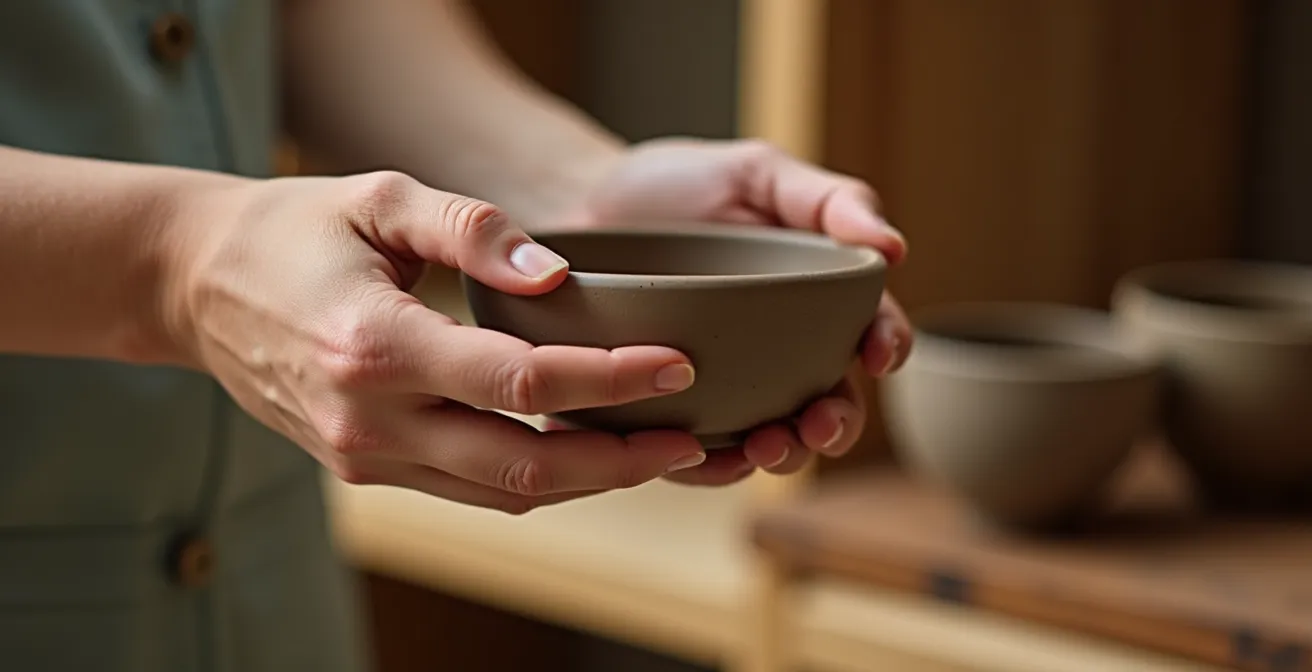
This approach, as visualized above, turns decluttering into a ritual of appreciation. You are not just subtracting; you are mindfully editing your environment to better reflect who you are and how you want to feel. It’s about ensuring your home is filled only with objects that have earned their place through function or feeling, creating a space that resonates with personal significance and warmth.
Open Plan or Defined Rooms: Which is Better for Introverts?
The layout of your home is the canvas upon which minimalist principles are painted. One of the biggest architectural debates is between an open-plan design and a home with traditionally defined, separate rooms. While open plans are often lauded for their bright, airy feel and promotion of social connection, they can be a significant source of stress for more introverted personalities. For an introvert, who recharges through solitude and quiet, the constant visual and auditory openness of a single large space can be just as draining as a cluttered room.
An open plan offers no escape. The sounds from the kitchen bleed into the living area, conversations carry across the entire floor, and there is no clear boundary to signal a desire for privacy. In contrast, defined rooms create natural “zones of retreat.” A separate study, a cozy reading nook, or even a living room that can be closed off with a door provides the psychological safety an introvert needs to decompress. It allows for a clear separation between social and private life within the home. This doesn’t mean introverts cannot thrive in open-plan homes, but it does require more strategic design—using large furniture, area rugs, or tall plants to create “soft” boundaries and designated quiet zones.
The choice between these layouts should be driven by an honest assessment of your personality and lifestyle, not just by current design trends. The following table breaks down the key differences to help you decide what truly supports your well-being.
| Aspect | Open Plan | Defined Rooms |
|---|---|---|
| Visual Flow | Continuous sight lines | Visual boundaries |
| Acoustic Privacy | Limited sound control | Better sound isolation |
| Flexibility | Adaptable zones | Fixed purposes |
| Social Interaction | Encourages connection | Allows retreat |
Ultimately, a successful minimalist home is one that is tailored to its inhabitants. For an introvert, the true feeling of “space” might not come from a vast, open room, but from the quiet solitude of a well-defined, personal sanctuary. The ultimate luxury is a home that respects your need for both connection and retreat.
The Staging Mistake That Makes a House Unlivable for Families
One of the biggest traps in minimalist design is creating a space that looks like a magazine spread but is completely impractical for daily life—especially for a family. This is the “staging mistake”: designing for an idealized, static version of life rather than the beautiful, messy reality. A home where children are afraid to play for fear of disrupting the perfect order, or where there’s no comfortable spot to curl up with a book, is not a sanctuary. It’s a museum, and it breeds resentment, not peace.
Family-friendly minimalism is not about having less, but about having smarter. It’s about choosing durable materials that can withstand spills and scuffs, incorporating clever storage solutions that make cleanup easy, and prioritizing comfort and function over pure aesthetics. This is where warmth truly enters the equation. A plush, deep-seated sofa might take up more visual space than a sleek, low-profile one, but its contribution to family movie nights and cozy evenings is immeasurable. The key is to find the balance where design serves life, not the other way around. This sentiment is echoed by design professionals who work with real families.
Minimalist decor focuses on simplicity… The design should be intentional and visually appealing, centered on functional furniture and essential elements.
– Angela Hamwey, House Beautiful
The pressure to maintain a “perfect” home can be a significant source of stress, particularly for mothers. In fact, specific research indicates that women’s cortisol levels remain elevated in cluttered home environments, showing how the state of the home is directly tied to parental well-being. A livable minimalist home for a family acknowledges this by building systems for order. This means accessible toy bins, designated “messy zones” for creative play, and furniture that is both beautiful and forgiving. The goal is a home that feels calm not because it’s always pristine, but because it’s easy to bring it back to a state of order.
When to Use Negative Space to Highlight Key Art Pieces?
In our culture of “more,” empty space is often seen as a void to be filled. In warm minimalist design, however, negative space—the empty area around and between objects—is one of the most powerful tools you have. It is not emptiness; it is an active element of composition. Just as pauses in music create rhythm and impact, negative space in a room gives objects room to breathe, allowing the eye and mind to rest. This is the antidote to the “hospital” feeling; sterile environments are often cluttered with functional but soulless items, whereas an intentionally curated space uses emptiness to create focus and elegance.
The most effective use of negative space is to highlight the things you truly love. A single, beautiful painting on a large, empty wall will have far more impact than five paintings crowded together. The surrounding space acts as a natural frame, drawing attention to the piece and elevating its importance. It tells a story: “This piece matters.” This principle applies to furniture and decor as well. By creating ample space around a sculptural armchair or a unique vase, you turn it from a simple object into a focal point. This practice of “less but better” is the essence of creating a room that feels both simple and luxurious.
The Power of the Empty Wall
In warm minimalist design, the strategic use of empty walls is fundamental. Instead of seeing a blank wall as a problem to be solved, designers treat it as a crucial part of the decor. As noted in analyses of warm minimalism, leaving plenty of room between elements allows negative space to work its magic, creating a sense of calm and allowing each selected piece to have its own presence. An empty wall isn’t a missed opportunity; it’s a deliberate choice that contributes to the room’s overall serenity.
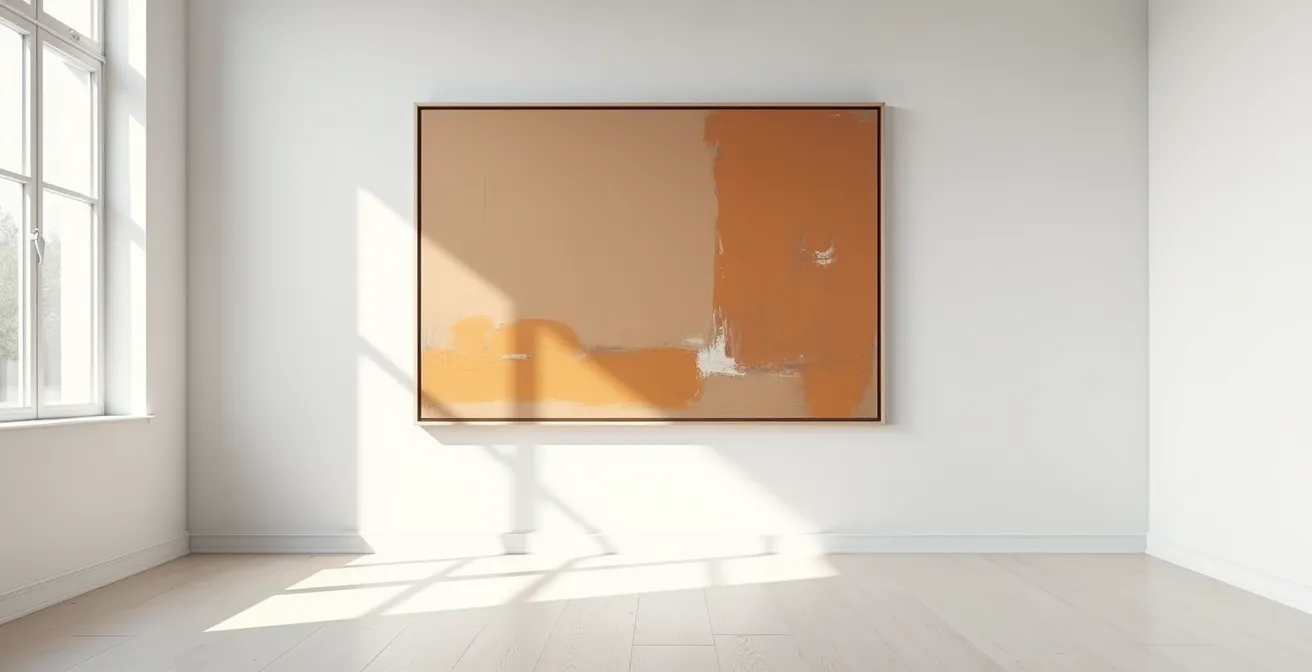
Think of your living room as a private art gallery. The curator (you) has carefully selected each piece. The gallery owner would never cram the walls full; they would use space to honor each work. By adopting this mindset, you transform your home into a personal exhibition of your life’s most cherished objects and art, ensuring each one has the spotlight it deserves. This is how you create a space that feels personal and profound, not empty and cold.
The Loneliness Trap That Affects 40% of Remote Workers
The principles of minimalist design extend beyond aesthetics and into our modern work lives, particularly as remote work becomes more prevalent. Our home is no longer just a place of rest; for many, it’s also the office. If this workspace is not intentionally designed, it can contribute to a significant modern affliction: loneliness. While remote work offers flexibility, it removes the spontaneous social interactions of an office, and recent research shows that around 40% of remote employees report feelings of isolation and loneliness. A poorly designed home environment can amplify these feelings.
When your workspace is cluttered, disorganized, or blended haphazardly with your living space, it creates a sense of perpetual unease. There’s no clear boundary between “work” and “life,” which can make you feel like you’re always on the clock but never truly connected. This lack of a dedicated, calming workspace can make the workday feel more isolating than it needs to be. In-depth analysis confirms this divide; a major 2024 Gallup report on the global workplace found that fully remote employees report significantly higher levels of loneliness (25%) than those who work exclusively on-site (16%).
Creating a minimalist, dedicated workstation—even if it’s just a corner of a room—helps combat this. It provides a sensory anchor for focus and professionalism. A clean desk, good lighting, and only the essential tools create a psychological boundary. This physical separation helps your brain transition into “work mode” and, just as importantly, “off mode” at the end of the day. A well-designed workspace respects your professional life, which in turn helps preserve the energy needed for the social connections that combat loneliness outside of work hours.
How to Set Up an Ergonomic Workstation in a Hotel Room in 10 Minutes?
The need for a functional, calming workspace isn’t confined to home. For the modern professional, the “office” can often be a temporary space like a hotel room. Working from a bed or a poorly-lit desk can quickly lead to physical discomfort and mental fatigue, exacerbating the stress of being away from home. Applying minimalist and ergonomic principles can transform even a generic hotel room into a productive outpost in just a few minutes. The key is to take control of your environment with a few simple, intentional actions.
The first step is to identify the best possible location for your workspace, prioritizing natural light from a window if possible. Then, focus on creating an ergonomic setup using the items at hand. A stack of books or your suitcase can be used to elevate your laptop to eye level, preventing neck strain. A rolled-up towel can provide lumbar support on a stiff chair. These small adjustments make a significant difference in your physical comfort and ability to focus over several hours.
Beyond the physical, it’s about reducing the sensory distractions of an unfamiliar environment. Taking five minutes to clear clutter from the desk and your immediate line of sight reduces visual noise. Using noise-cancelling headphones can create an auditory bubble of focus. By taking these deliberate steps, you are not just setting up a laptop; you are creating a personal sanctuary of productivity, making your work on the road more comfortable and efficient.
Your Action Plan: The 10-Minute Hotel Workspace
- Position your laptop at eye level using available books or your luggage to create a makeshift stand.
- Spend 5 minutes addressing clutter in your temporary workspace, clearing the desk of everything but the essentials.
- Use a window as your focal point for 20-20-20 eye breaks (every 20 minutes, look at something 20 feet away for 20 seconds).
- Create a sensory anchor with a familiar scent (like a travel candle) or sound (a focus playlist) to make the space feel more personal.
- Set up noise-cancelling headphones to block out unfamiliar hotel sounds and create a consistent work environment.
Key Takeaways
- Minimalism’s true goal is mental clarity, achieved by reducing the ‘visual noise’ that increases stress hormones like cortisol.
- Warmth is created not by adding more stuff, but through intentional choices: tactile textures, natural materials, and objects with emotional resonance.
- Effective minimalism serves your life; it is functional for families, respects personality types (like introverts), and creates a sanctuary, not a sterile showroom.
How to Use Feng Shui Principles to Improve Flow in a Small Apartment?
As we refine our minimalist space, we can introduce another layer of intention through the ancient practice of Feng Shui. At its core, Feng Shui is the art of arranging your environment to optimize the flow of positive energy, or “Chi.” This aligns perfectly with the goals of warm minimalism: creating a home that not only looks good but also feels good and supports your well-being. In a small apartment, where every inch counts, these principles can be particularly transformative, helping to create a sense of spaciousness and harmony.
One of the most fundamental principles of Feng Shui is the command position. This dictates that your bed, desk, and primary seating (like the sofa) should be positioned so that you can see the door to the room without being directly in line with it. This creates a subconscious sense of security and control, as you are aware of anyone entering your space. Another key concept is ensuring clear pathways. Furniture should be arranged to allow Chi to flow smoothly and freely, without obstruction. Blocked pathways can create a feeling of being “stuck,” both physically and energetically.
Feng Shui also emphasizes the balance of the five elements: wood, fire, earth, metal, and water. You can incorporate these through colors, materials, and objects. A wooden coffee table (wood), a candle (fire), ceramic pots (earth), a metal lamp (metal), and a piece of art depicting water or a small indoor fountain (water) can bring a sense of natural balance and harmony to the room. The positive impact of such an ordered environment is not just anecdotal; studies show that individuals in decluttered environments report a notable improvement in well-being and a significant decrease in daily stress. By integrating these timeless principles, you are adding a final, powerful layer of intention, ensuring your home is a true source of positive energy and a sanctuary for the soul.
By shifting your perspective from mere aesthetics to mindful well-being, you can confidently design a minimalist living room that is anything but cold. It becomes a warm, personal, and restorative sanctuary—a space that calms your mind, supports your life, and truly feels like home.