In summary:
- Adopt a “textile triage” system: first try to repair, then repurpose at home, then find specialized recycling.
- Never put damaged or unwearable clothing in charity donation bins; this costs organizations money.
- Use dedicated textile recycling programs for items that are too worn, as up to 95% of the material can be recovered.
- Distinguish between natural fibers (cotton, wool), which can be composted, and synthetics (polyester), which must be recycled.
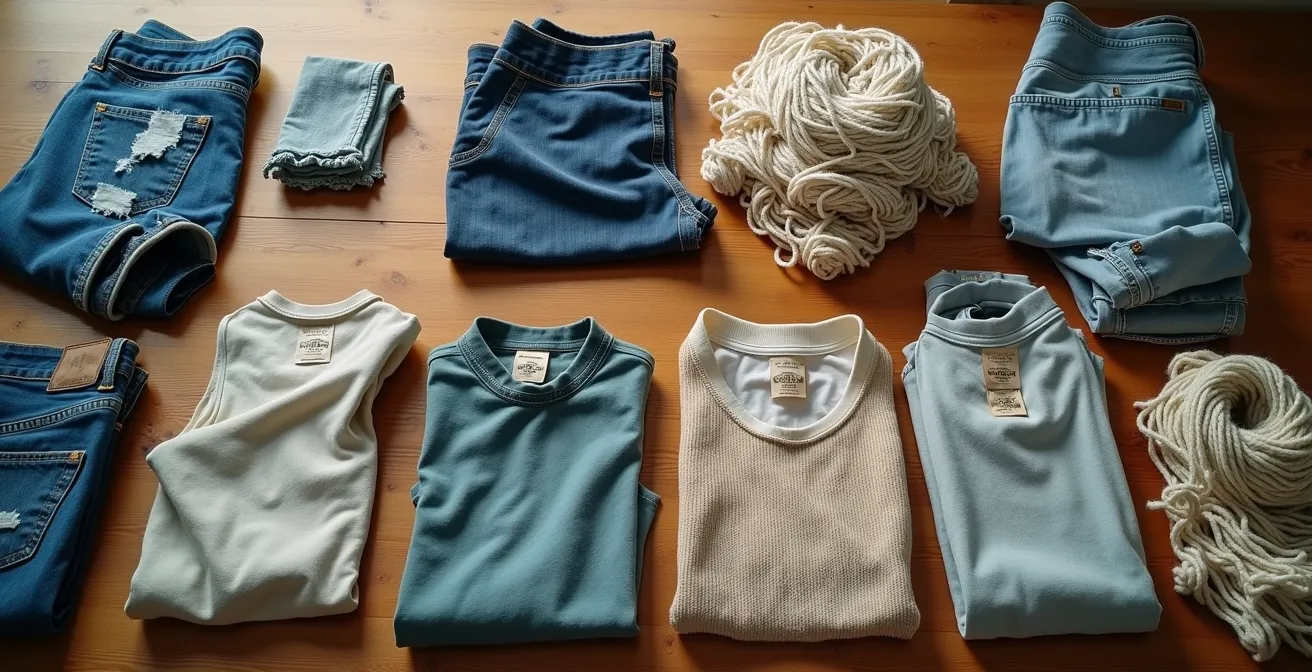
That bag of clothes sitting in the back of your closet is a familiar sight for many. It’s filled with good intentions and worn-out textiles: the t-shirt with a stubborn stain, the jeans with a tear in the wrong place, and the socks that have lost their partners and their structural integrity. The common advice is to “donate it” or “turn it into rags,” but this oversimplifies a complex problem. You know instinctively that throwing them in the trash isn’t the right answer, but the path to responsible disposal feels murky and confusing.
As a waste management consultant, I can tell you that the most significant environmental impact comes not from a single choice, but from the lack of a clear system. The reality is that charities are not recycling centers, and a well-intentioned but unusable donation actually becomes a financial burden for them. The key isn’t finding one magic solution for everything, but adopting a practical triage system—a method for sorting your items based on their condition and material to ensure each piece follows the most sustainable path possible.
This guide will walk you through that exact system. We’ll move beyond the generic advice and give you a clear decision-making framework. You’ll learn why certain materials are a bigger problem than others, how to avoid common mistakes that harm charities, and discover the specific, actionable steps for everything from repairing a sock to supporting businesses that are closing the loop on textile waste. By the end, you’ll be able to confidently clear out that bag of clothes, knowing each item is heading toward its best possible next life.
This article provides a structured approach to textile waste, outlining a clear decision-making framework. The following summary will guide you through the key stages of responsibly managing your worn-out clothes.
Summary: A Consultant’s Guide to End-of-Life Textiles
- Why Polyester Clothes Sit in Landfills for 200 Years?
- How to Darn a Sock in 5 Minutes to Extend Its Life?
- Goodwill or Textile Bin: Where Should Your Ripped Jeans Go?
- The Donation Mistake That Costs Charities Millions a Year
- When to Turn Old T-Shirts into Cleaning Rags vs. Yarn?
- The Laundry Mistake That Releases Microplastics into the Ocean
- Why Burying Waste 6 Inches Deep is Crucial for Soil Health?
- How to Shift Your Spending to Support B-Corp Certified Businesses?
Why Polyester Clothes Sit in Landfills for 200 Years?
To understand how to manage textile waste, we first need to understand the material itself. The modern wardrobe is dominated by synthetic fibers. According to the UN Environment Programme, 60% of all clothing contains plastic-based materials like polyester. Unlike natural fibers such as cotton or wool, which biodegrade relatively quickly, polyester is a plastic derived from petroleum. It is not designed to break down in nature. When a polyester shirt ends up in a landfill, it doesn’t decompose; it fragments over centuries, leaching chemicals and contributing to microplastic pollution.
The scale of this issue is staggering. In California alone, residents discard an estimated 1.2 million tons of textiles each year, with a significant portion being these persistent synthetic materials. This has prompted legislation like the Responsible Textile Recovery Act, which aims to place responsibility back on apparel manufacturers for the collection and recycling of their products. This concept, known as Extended Producer Responsibility (EPR), is a recognition that the problem cannot be solved at the consumer level alone. However, your individual choices play a crucial role in diverting these materials from the landfill, where they can persist for over 200 years, creating a lasting environmental burden.
Understanding this long-term impact is the first step in our triage system, as it underscores why simply throwing items away is the least desirable option.
How to Darn a Sock in 5 Minutes to Extend Its Life?
The most sustainable garment is the one you already own. Before considering recycling or repurposing, the first step in any effective textile triage is to ask: “Can this be repaired?” For small holes in socks, sweaters, or woven fabrics, darning is a simple, fast, and incredibly effective skill. It requires nothing more than a needle and thread and can extend the life of an item for months or even years. This small act of maintenance is a powerful antidote to disposable culture.
Beyond its practical benefit, mending can be a mindful and creative act. The practice of “visible mending,” where the repair is intentionally highlighted with colorful thread, transforms a flaw into a feature. It celebrates the history of the garment and adds a unique, personal touch. Mastering a basic darning stitch takes only a few minutes of practice and is a foundational skill for anyone looking to reduce their textile waste and build a more resilient wardrobe. Every item you repair is one less item entering the waste stream.
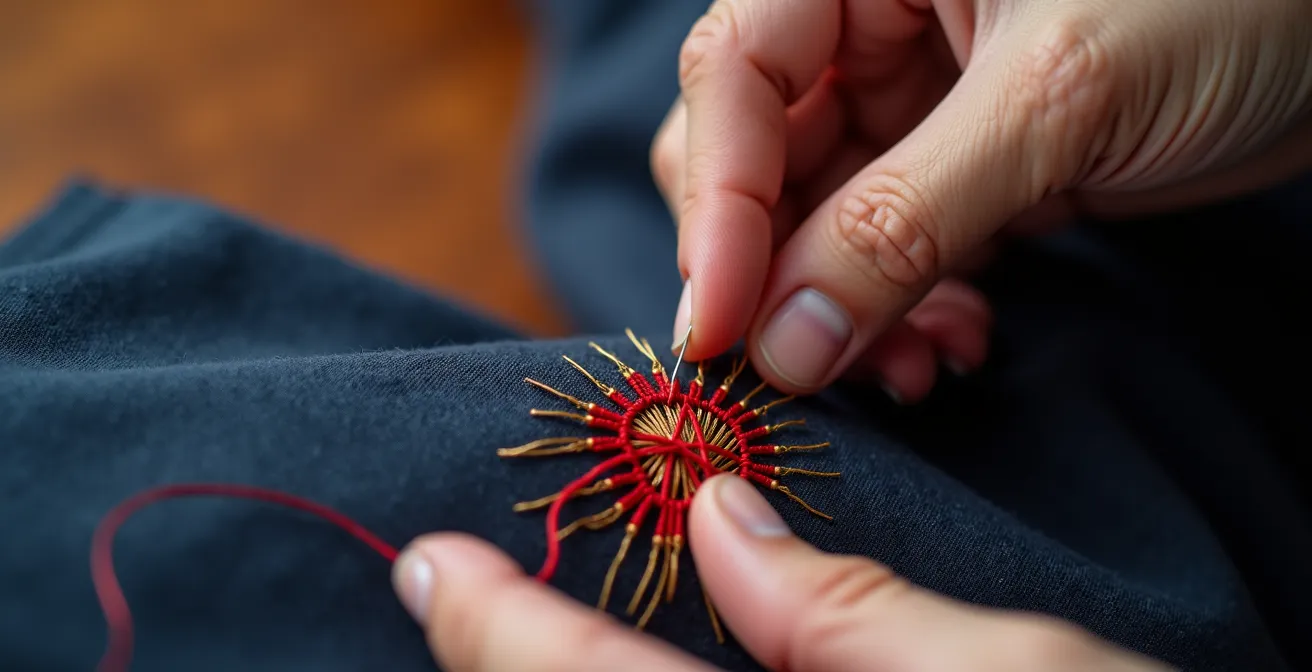
As you can see, the weaving technique not only closes the hole but also reinforces the surrounding fabric, preventing further damage. This simple act of care is the most impactful step you can take in the lifecycle of your clothing. It’s a direct intervention that requires minimal resources and yields maximum benefit, keeping valuable materials in use and out of the landfill.
However, when a garment is beyond a simple fix, it’s time to move to the next stage of our triage process.
Goodwill or Textile Bin: Where Should Your Ripped Jeans Go?
This is the central question of textile triage. When an item is no longer wearable, where does it go? The answer is critical, as a wrong choice can do more harm than good. A staggering 85% of clothing and textiles end up in landfills, even though the vast majority of those materials are recyclable. The key is sending the item to the right place. Charity thrift stores like Goodwill are for reselling clothing; they need items that are in good, wearable condition. Textile recycling bins are for processing materials; they are designed to handle items that are torn, stained, or otherwise unwearable.
Confusing the two leads to a phenomenon known as “wish-cycling”—donating non-sellable items with the hope that the charity can do something with them. In reality, the charity must pay to dispose of these items, draining their resources. To make the right choice, you need a clear decision-making guide. The following table breaks down the most common options for your end-of-life garments.
| Option | Accepts Damaged Items | What Happens Next | Best For |
|---|---|---|---|
| Goodwill/Thrift Stores | No (wearable only) | Resold locally or exported | Good condition items |
| Textile Recycling Bins | Yes | Sorted, shredded for insulation or rags | Torn/stained items |
| H&M Take-Back Program | Yes (any condition) | Recycled into new fibers | All textile types |
| Retold/Trashie Bags | Yes | 253-tier grading system for reuse/recycle | Mixed condition items |
This table acts as your primary triage tool. If an item is clean and undamaged, a thrift store is an excellent choice. If it’s your ripped jeans, a stained t-shirt, or a single sock, a dedicated textile recycling bin or a brand take-back program is the correct and responsible destination. These specialized programs are equipped to sort textiles by fiber type and downcycle them into new products like insulation, carpet padding, or industrial rags, ensuring the material’s value is not lost.
Making this distinction correctly not only helps the environment but also directly supports the charitable organizations you aim to help.
The Donation Mistake That Costs Charities Millions a Year
The impulse to donate is a generous one, but it can inadvertently create a significant financial burden when misdirected. The core issue is that charity shops are retailers, not waste management facilities. Their business model relies on selling donated goods to fund their missions. When they receive items that are torn, stained, wet, or otherwise unusable, they cannot sell them. Instead, they must pay to have this waste hauled away. According to some estimates, Americans generate 15 million metric tons of textile waste annually, and a significant portion of what’s intended for donation ends up as costly refuse for non-profits.
This isn’t a minor expense. As the environmental organization Green America points out, the cost of this disposal is substantial. In their report on the textile industry, they highlight the direct financial impact:
It typically costs $45 per ton to dispose of textiles, equaling hundreds of millions of dollars per year.
– Green America, Green America Environmental Report
This is money that could have been spent on job training, food programs, or community support. Your bag of holey socks and ripped shirts, when dropped at a charity bin, isn’t a donation; it’s an operational cost. This is why the “textile triage” system is so vital. By taking a moment to sort your items and sending only wearable clothing to charities, you are protecting their resources and ensuring your donation is a genuine gift, not a hidden expense. For everything else, the specialized textile recycling stream is the appropriate and responsible choice.
So, if unusable items don’t go to charity, what are their other potential uses before they enter the formal recycling stream?
When to Turn Old T-Shirts into Cleaning Rags vs. Yarn?
After repairing what you can and sorting what should go to textile recycling, you’re left with a middle category: items not fit for donation but still possessing useful material. This is the “repurpose at home” stage of our triage, where an old t-shirt can find a second life as a highly functional household tool. But even here, a little knowledge goes a long way. The best use for an old shirt depends on its fiber content.
Cotton shirts are highly absorbent, making them perfect for cleaning rags that can replace countless rolls of paper towels. Polyester-blend shirts, on the other hand, are less absorbent but more durable and stretchy. This quality makes them ideal for creating “t-shirt yarn,” a thick, soft material perfect for crochet, knitting, or macrame projects like rugs, baskets, and trivets. By matching the material to the task, you maximize the value you get from the item before its ultimate disposal.
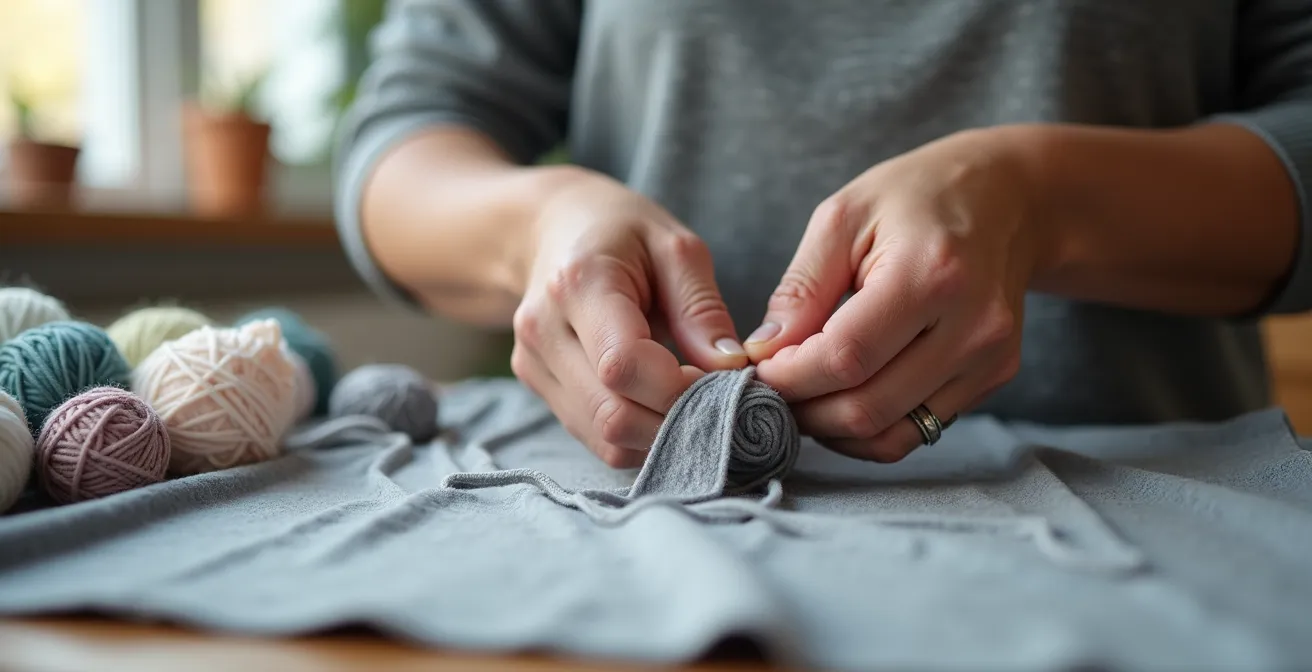
This process of at-home downcycling is a practical way to extend a material’s life cycle within your own four walls. It closes a small loop, reducing your consumption of new products (like paper towels or craft yarn) while keeping waste out of the landfill for longer. The following guide provides a quick decision framework for repurposing old shirts.
Your T-Shirt Repurposing Action Plan
- For cleaning rags: Use 100% cotton shirts (most absorbent).
- For t-shirt yarn: Choose poly-blend shirts (more durable and stretchy).
- Cut into 12×12 inch squares for cleaning, or 1-inch continuous strips for yarn.
- Store cleaning rags in a dedicated basket under the sink for easy access.
- Wash and reuse cleaning rags to completely replace paper towels.
But even as we use these items, there’s an invisible environmental impact we need to manage.
The Laundry Mistake That Releases Microplastics into the Ocean
Our responsibility for synthetic fabrics like polyester doesn’t end when we decide to keep them. Every time we wash these garments, they shed microscopic plastic fibers—or microplastics—that are too small to be caught by wastewater treatment plants. These fibers flow into rivers and oceans, where they are ingested by marine life and enter the global food chain. This is an invisible but pervasive form of pollution directly linked to our closets. The problem is most acute with new clothing; research reveals that 90% of microplastics from synthetic clothing are lost in the first three launderings.
While we can’t eliminate this shedding entirely, we can significantly reduce it. Simple changes to our laundry routine, such as washing in cold water and choosing to air-dry, can cut down on the friction that causes fibers to break loose. For a more direct intervention, several products are now available that are specifically designed to capture microplastics in the wash. These tools are an essential part of a responsible textile management system, addressing the ongoing environmental cost of the synthetic clothing we wear every day.
The following table compares some of the most common solutions for preventing microplastic pollution from your laundry.
| Solution | Effectiveness | Cost | Portability |
|---|---|---|---|
| Guppyfriend Bag | Captures 90% of fibers | $30-35 | Excellent for travel |
| Cora Ball | Captures 26% of fibers | $38-42 | Good, fits in any washer |
| Air-drying only | Reduces shedding by 50% | Free | Universal |
| Cold water washing | Reduces shedding by 30% | Free | Universal |
Finally, what about the clothes made from natural fibers? They offer a unique end-of-life option that synthetics never will.
Why Burying Waste 6 Inches Deep is Crucial for Soil Health?
For a small subset of your worn-out clothes, the final destination can be your own backyard. Garments made from 100% natural fibers—such as cotton, hemp, wool, linen, silk, and cashmere—are biodegradable. This means that, under the right conditions, microorganisms can break them down and return their nutrients to the soil. This is the truest form of recycling, allowing the material to complete its natural cycle. However, this option comes with strict conditions. The fabric must be completely natural, free from synthetic blends like spandex or polyester, and stripped of any non-biodegradable elements.
Before composting a garment, you must meticulously prepare it. All zippers, buttons, tags, and synthetic threads (often used even in “100% cotton” clothes for seams) must be removed. The fabric should then be cut into small pieces to increase the surface area and speed up decomposition. Finally, the material must be buried at least 6 inches deep in your compost pile or garden soil. This depth is crucial for several reasons: it keeps the material moist, provides access for decomposing organisms like worms and bacteria, prevents it from being blown away, and deters animals. Burying natural fibers this way ensures they break down efficiently and enrich the soil, rather than becoming a source of contamination.
This final step in the triage process highlights the importance of knowing what our clothes are made of, which brings us to the most proactive solution of all: changing how we shop.
Key takeaways
- Polyester is a form of plastic that does not biodegrade, persisting in landfills for centuries and releasing microplastics.
- “Wish-cycling” unwearable clothes to charities costs them millions in disposal fees; only donate items that are in sellable condition.
- A “textile triage” system is the most effective approach: first repair, then repurpose at home, and finally, send to specialized textile recyclers.
How to Shift Your Spending to Support B-Corp Certified Businesses?
So far, we’ve focused on reactive solutions for the clothes we already own. The ultimate step in responsible textile management is proactive: shifting our purchasing habits to support companies that are building a more sustainable, circular economy. One of the most reliable indicators of a company’s commitment is B-Corp certification. This is a rigorous, third-party verification that a company meets high standards of social and environmental performance, public transparency, and legal accountability. B-Corps are legally required to consider the impact of their decisions on their workers, customers, suppliers, community, and the environment.
In the textile industry, this often translates into tangible programs that address end-of-life waste. These companies don’t see the sale of a jacket as the end of their responsibility. They build take-back and repair programs directly into their business models, making it easy for consumers to return worn-out products for resale or proper recycling.
Case Study: Patagonia’s Worn Wear Program
Patagonia, a well-known B-Corp, exemplifies this ethos through their Worn Wear program. They actively encourage customers to trade in used Patagonia items, regardless of where they were purchased. Items in good condition are professionally cleaned, repaired, and resold on their dedicated Worn Wear website, with the customer receiving store credit. Items beyond repair are disassembled and recycled into new materials. This program demonstrates a core B-Corp value: taking ownership of a product’s entire lifecycle and creating a circular system that minimizes waste and maximizes material value.
By choosing to support B-Corps and companies with similar transparent take-back programs, you are voting with your wallet for a better system. You are investing in a future where “producer responsibility” is the norm, not the exception. Identifying these leaders requires a bit of research, but the effort pays dividends by fueling a fundamental shift in the industry.
Your Action Plan: Vetting Sustainable Brands
- Check the official B-Corp directory for a brand’s verified certification status.
- Read their annual impact reports, looking for specific metrics on textile waste reduction and recycling rates.
- Look for transparent and easy-to-use take-back, resale, or repair programs on their website.
- Verify if their take-back program accepts all brands or only their own products.
- Research their textile recycling partners to understand the actual processes and end-of-life solutions.
Start today by applying this triage system to your own closet. By repairing, repurposing, recycling, and shopping with intention, you can transform a bag of waste into a powerful act of environmental stewardship.
Frequently asked questions about How to Recycle Old Clothes That Are Too Worn to Donate?
Which fabrics can be safely composted?
Only 100% natural fibers like cotton, hemp, wool, linen, silk, jute or cashmere without synthetic dyes, chemical finishes, or non-biodegradable trims can be composted.
Why must synthetic blends never be buried?
Synthetic fibers release microplastics and toxic chemicals into soil and groundwater, contaminating the environment for decades.
How should natural fabrics be prepared for composting?
Cut into small pieces, remove all buttons, zippers, and synthetic threads, then bury at least 6 inches deep to ensure proper decomposition.