In summary:
- Shift your mindset from a passive tourist to an active steward by understanding the “why” behind preservation rules.
- Recognize that seemingly small actions, like stepping off a trail or touching a surface, contribute to irreversible micro-erosion.
- Use your visit to contribute positively, whether by submitting observations to citizen science projects or by decontaminating your gear to prevent spreading invasive species.
- Plan ahead to manage your impact, from securing timed-entry passes to avoid overcrowding to knowing seasonal wildlife behavior.
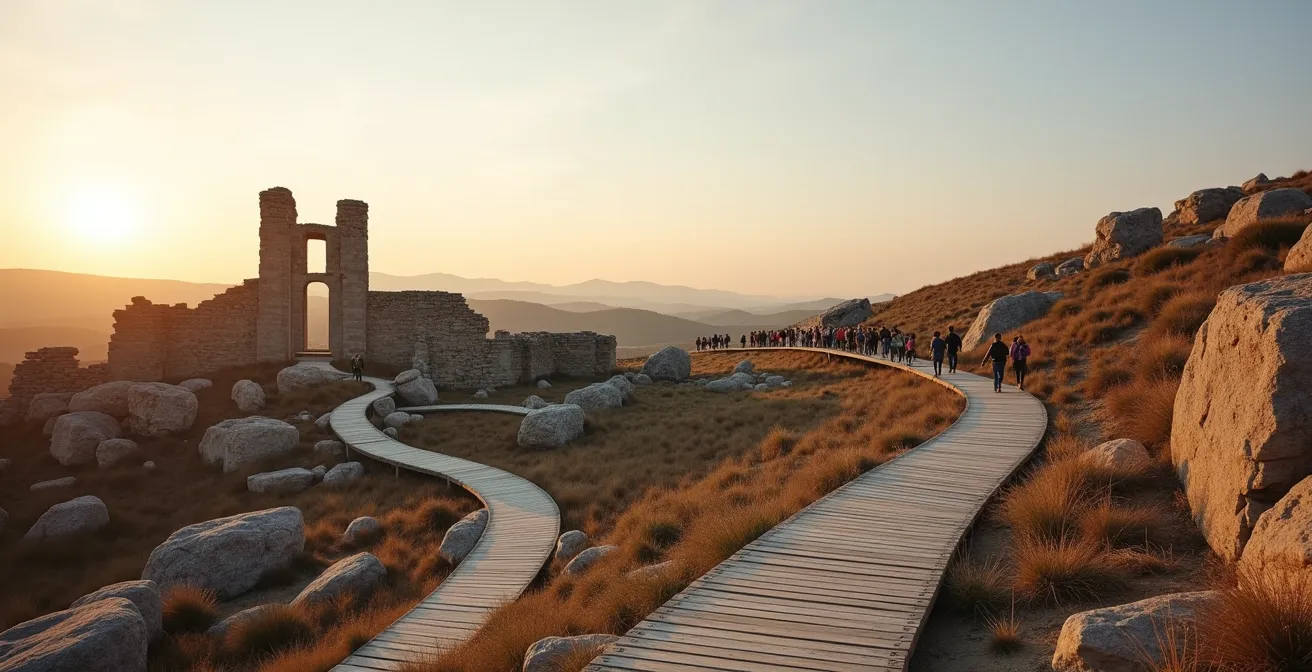
The desire to stand in the presence of history and natural wonder is a powerful human impulse. We travel across the globe to walk through ancient ruins, gaze at towering rock formations, and witness unique ecosystems. Yet, there is a profound paradox at the heart of this passion: the very act of visiting these fragile places can accelerate their destruction. We risk loving our heritage sites to death. The common advice, “Leave No Trace,” is a valuable starting point, but it often remains a superficial checklist that fails to instill a deeper understanding.
Most guides will tell you to pack out your trash and stay on the trails, and while essential, this advice barely scratches the surface of our true impact. It doesn’t explain the decades of ecological growth destroyed by a single footstep on cryptobiotic soil or how the simple act of taking a photo can endanger both you and the wildlife you admire. This passive obedience to rules is not enough to protect these irreplaceable treasures for future generations.
The true key to responsible visitation lies not in simply following rules, but in understanding the invisible consequences of our actions and embracing a mindset of active stewardship. This guide moves beyond the platitudes to explore the specific, often unseen, ways our presence affects delicate environments. It’s about transforming your role from a mere consumer of scenery into a conscious guardian of the places you cherish.
By exploring the science behind the rules, learning how to contribute positively, and planning your visit with preservation in mind, you can ensure your heritage footprint is one of respect and support, not erosion and decline. This article will provide the knowledge to make that shift.
Summary: A Guide to Conscious Heritage Tourism
- Why Touching the Crypto-Biotic Soil in Utah Destroys Decades of Growth?
- How to Use iNaturalist to Contribute Data While Hiking in National Forests?
- State Park or National Park: Which Protects Local Heritage More Effectively?
- The Boot Cleaning Mistake That Spreads Invasive Seeds Across States
- When to Avoid Coastal Areas to Protect Nesting Sea Turtles?
- The Photo Mistake That Puts You in Danger with Bison at Yellowstone
- The 4 Civil Rights Landmarks That Teach More Than Any Museum Textboard
- How to Secure Entry Reservations for Yosemite National Park During Peak Season?
Why Touching the Crypto-Biotic Soil in Utah Destroys Decades of Growth?
In the arid landscapes of places like Arches and Canyonlands National Parks, the ground is covered by a lumpy, blackish crust that looks like scorched earth. This is not dirt; it’s cryptobiotic soil, a living community of cyanobacteria, mosses, and lichens. This “living skin” is the foundation of the desert ecosystem, preventing erosion by binding sand particles together, absorbing precious rainwater, and fixing nitrogen to fertilize the soil for other plants.
Despite its rugged appearance, this crust is extraordinarily fragile. The filaments that hold the soil together are microscopic, and the pressure from a single human footstep is enough to shatter them. The damage is nearly invisible to the casual observer, but its consequences are catastrophic and long-lasting. Once broken, the soil loses its cohesion and is easily washed or blown away, initiating a cycle of erosion that can scar the landscape for centuries.
The recovery process is painstakingly slow, operating on a geological timescale rather than a human one. According to scientific analysis, research shows that damaged cryptobiotic soil crusts can take 50 to 250 years to fully regenerate, depending on the ecosystem and extent of the damage. When you step off the trail, you are not just leaving a footprint; you are erasing decades, or even centuries, of slow, vital growth. This is why rangers implore visitors to stay on designated trails and rock surfaces—it is the single most important act of preservation in these delicate desert environments.
How to Use iNaturalist to Contribute Data While Hiking in National Forests?
Active stewardship goes beyond simply minimizing your negative impact; it involves finding ways to make a positive contribution. One of the most powerful tools for this is citizen science, and platforms like iNaturalist have transformed every hiker with a smartphone into a potential field researcher. By documenting the plants and animals you encounter, you can provide invaluable data to scientists, land managers, and conservation organizations.
The process is simple: you take a photo of an organism, upload it to the app, and the community—along with image recognition AI—helps you identify it. Each confirmed observation, complete with a date and GPS coordinate, becomes a data point that contributes to a global biodiversity database. This information helps track species distribution, monitor the spread of invasive plants, identify populations of rare or endangered species, and understand the effects of climate change on ecosystems. Your casual hike can directly inform conservation policy and land management decisions in the very forest you are enjoying.
However, with this power comes responsibility, especially in sensitive areas. When documenting, it is crucial to protect vulnerable species from unwanted attention or poaching. Adhering to best practices ensures your contribution is helpful, not harmful.
- Enable location obscuring for rare or endangered species observations; the app often does this automatically, but it’s wise to be aware.
- Never post photos or exact coordinates of nests, dens, or other breeding sites.
- For highly sensitive species, consider waiting 24-48 hours before uploading your observation to dissociate your real-time presence from the location.
- Join specific “Projects” on iNaturalist that are focused on your hiking region to contribute to targeted local research.
State Park or National Park: Which Protects Local Heritage More Effectively?
When choosing a destination, visitors often gravitate towards the epic scale and name recognition of National Parks. However, for those interested in the preservation of specific local heritage, State Parks can often be more effective and agile stewards. The difference lies in their funding, management focus, and connection to the community. National Parks are tasked with preserving sites of national significance, operating under standardized federal protocols and funding streams. This ensures a high, consistent level of protection but can sometimes be slow to adapt to unique local needs.
State Parks, by contrast, are focused on heritage of local or regional significance. Their management is often more community-driven, allowing for greater flexibility and a more intimate connection to the stories and people behind a site. This local-centric approach fosters a powerful sense of ownership and direct engagement from nearby residents, who are often the most passionate advocates for preservation.
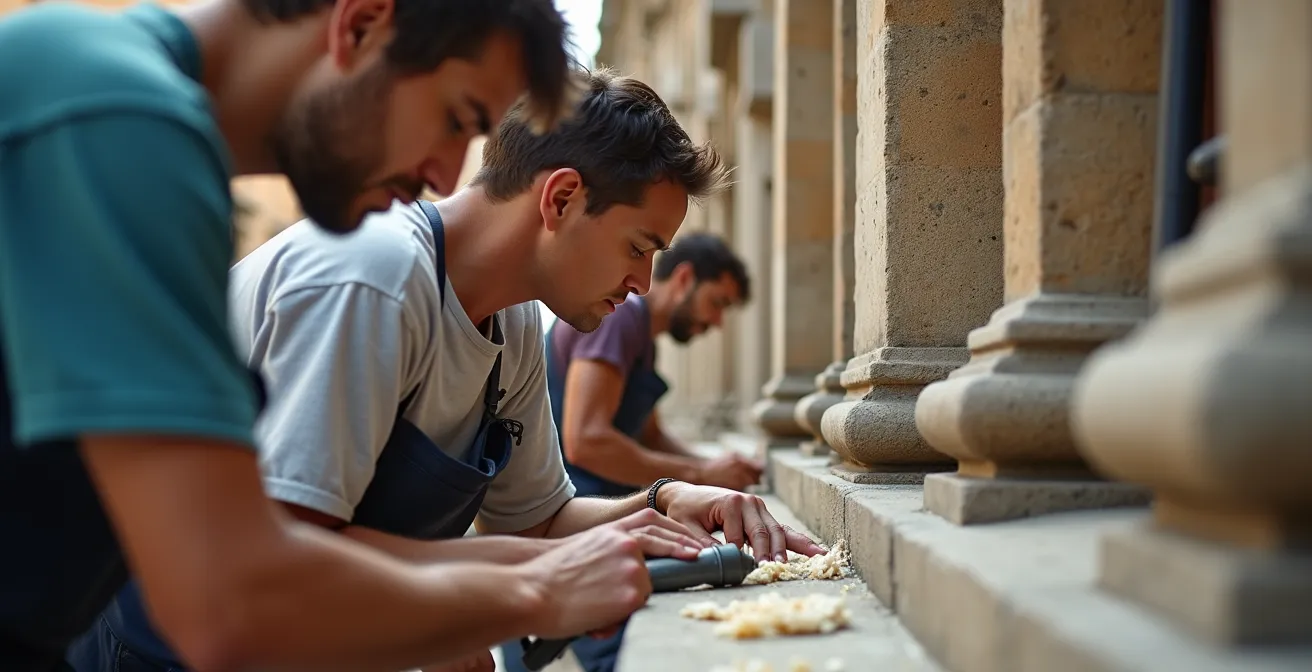
This difference in scale and focus creates distinct models of protection. While both systems are vital, a visit to a State Park can feel more personal, with the impact of your visitor fees and support more directly visible within the community. The following table breaks down the key distinctions.
| Aspect | State Parks | National Parks |
|---|---|---|
| Funding Source | State budgets, local fundraising | Federal funding, national lobbying |
| Heritage Focus | Local/regional significance | National significance |
| Management Flexibility | More agile, community-driven | Standardized federal protocols |
| Visitor Support | State license plates, local volunteer days | National advocacy, federal donations |
As this comparative analysis of heritage management models shows, the most effective protection often depends on the specific context of the site. Supporting both national and state systems is crucial for a comprehensive preservation strategy.
The Boot Cleaning Mistake That Spreads Invasive Seeds Across States
One of the most insidious and underestimated threats to protected ecosystems is the spread of invasive species. These non-native plants, animals, and pathogens can outcompete native species, disrupt food webs, and permanently alter landscapes. While some introductions are accidental imports, many are spread unwittingly by visitors themselves, with hiking boots acting as the primary vehicle for transmission.
A hiker can walk through a patch of invasive weeds in one state, collecting thousands of tiny seeds in the mud caked on their boot treads. Days later, they might hike in a pristine national forest hundreds of miles away, depositing those seeds with every step. These “hitchhiker” seeds can then germinate and establish a new population, choking out native wildflowers and degrading the habitat for local wildlife. This biological contamination is a form of erosion just as damaging as physical wear and tear. In fact, the economic cost of invasive species reaches billions spent annually on control and mitigation efforts, a clear sign of the scale of the problem.
The common mistake is thinking a quick stomp or scrape is enough. A thorough decontamination protocol is necessary to truly prevent this cross-state contamination. Adopting this as a post-hike ritual is a critical act of environmental stewardship.
Your Gear Decontamination Checklist: Preventing the Spread
- Before Leaving the Trailhead: Remove all visible soil, mud, and plant debris from your boots, trekking poles, and any gear that touched the ground. Use a stiff brush for boot treads.
- Disinfect Surfaces: Spray boot soles and trekking pole tips with a 70% alcohol solution or a designated disinfectant. This kills microscopic spores and seeds.
- Inspect Your Pet: If hiking with a dog, thoroughly check and clean their paws and fur for any clinging seeds or burrs before they get in the car.
- Contain and Clean: Place dirty boots and gear in a separate bag for transport. Once home, wash all hiking clothes and clean gear with hot, soapy water.
- Plan Your Route: When possible, hike in infested areas last to avoid carrying invasive seeds into more pristine locations on the same day.
When to Avoid Coastal Areas to Protect Nesting Sea Turtles?
Coastal heritage is not just about historic lighthouses and shipwrecks; it includes the ancient, instinctual rituals of wildlife. Sea turtles, for instance, have been returning to the same beaches to lay their eggs for millions of years. However, these nesting grounds are incredibly vulnerable to human disturbance, and knowing when to give them space is a crucial aspect of coastal stewardship.
The primary nesting season in the Northern Hemisphere typically runs from May through October. During this time, female turtles emerge from the ocean at night to dig nests and lay their eggs in the sand above the high-tide line. The most critical rule for protecting them is to avoid beaches at night. Artificial lights from flashlights, phone screens, and coastal properties can disorient nesting females, causing them to abandon their efforts and return to the sea (a “false crawl”). These lights are even more dangerous for hatchlings, who rely on the faint, natural light over the ocean to find their way to the water. Artificial lights can lead them inland towards roads and predators, a fatal mistake.

During the day, a respectful beachgoer can still cause harm. It’s essential to never disturb marked nesting areas, which are often roped off by conservation groups. Even outside these zones, be mindful of your activities. Flattening sandcastles, filling in holes, and removing beach furniture at the end of the day eliminates obstacles that could trap or impede both nesting females and emerging hatchlings. If you are in a known nesting area, using only red-filtered lights is the best practice, as turtles are far less sensitive to red wavelengths. Respecting these temporal and spatial boundaries is a simple yet profound way to ensure this ancient cycle continues.
The Photo Mistake That Puts You in Danger with Bison at Yellowstone
In the age of social media, the desire for the perfect wildlife photo can override common sense, leading to dangerous encounters that harm both people and animals. Nowhere is this more apparent than in parks like Yellowstone, where majestic bison roam freely. These animals may seem docile as they graze, but they are powerful, wild, and unpredictable. The most common mistake visitors make is underestimating the distance needed for safety, slowly creeping closer for a “better” shot, and misinterpreting the animal’s tolerance for their presence.
Getting too close not only puts you at risk of being charged but also habituates the animal to humans, which can lead to more aggressive behavior in the future and may ultimately result in the animal being euthanized. The National Park Service has a clear and simple rule for judging your distance, a principle every visitor should internalize.
If your presence or action causes the animal to stop what it’s doing (eating, resting), you are too close.
– National Park Service Wildlife Guidelines, Yellowstone National Park Visitor Safety Protocol
This is the ultimate test. Your goal is to be an invisible observer, not an interruption. To achieve this, you must follow strict guidelines and invest in the right equipment, rather than proximity.
- Maintain a minimum 25 yards (23 meters) distance from bison and elk, and 100 yards (91 meters) from bears and wolves.
- Use a telephoto lens (200mm or greater) to capture close-up shots from a safe distance. Your phone’s camera is not a substitute.
- Never position yourself between an animal and its young, or between an animal and its escape route.
- If photographing from your vehicle, pull completely off the road into a designated pullout. Never stop in the middle of traffic.
- Learn to recognize warning signs of agitation, such as a raised tail, pawing the ground, head-bobbing, or snorting. If you see these, you are already too close and must back away slowly.
The 4 Civil Rights Landmarks That Teach More Than Any Museum Textboard
Some of our nation’s most powerful heritage sites are not grand monuments but humble, everyday places consecrated by history: a bridge in Selma, a lunch counter in Greensboro, a motel in Memphis, a church in Birmingham. These are not just historical artifacts; they are sites of conscience that demand a different kind of visitation. To truly understand their significance, one must move beyond the role of a tourist and become a witness. This means engaging with the site in a way that prioritizes emotional and sensory connection over simple documentation or physical interaction.
The goal is to feel the weight of the history in these spaces. Instead of rushing to take a selfie, stand on the Edmund Pettus Bridge and listen to the silence, imagining the sounds of that day. Sit in a pew at the 16th Street Baptist Church and observe how the light filters through the stained-glass windows, feeling the acoustics of the sanctuary. This practice of sensory witnessing creates a deeper, more personal connection to the past than any museum textboard ever could. It respects the sanctity of the site while allowing its story to resonate on a profound level.
This approach embodies the “Community as Curator” model, where the history is not just presented but felt, and the visitor’s role is to absorb and reflect. To visit these places is not to consume a product but to participate in an act of remembrance. By leaving behind only reflections and taking away only understanding, you honor the legacy of those who sacrificed there. This form of respectful engagement ensures these landmarks continue to serve as powerful classrooms for generations to come, teaching lessons of struggle, resilience, and the ongoing fight for justice.
Key takeaways
- Active stewardship is about understanding the “why” behind rules, transforming your visit from passive consumption to active preservation.
- Your “heritage footprint” includes invisible impacts like spreading invasive seeds and causing micro-erosion, which require conscious prevention.
- Planning is a preservation tool: securing reservations prevents overcrowding, and knowing seasonal wildlife behavior protects vulnerable species.
How to Secure Entry Reservations for Yosemite National Park During Peak Season?
One of the greatest threats to our most beloved National Parks is their own popularity. Overcrowding leads to traffic gridlock, trail erosion, stressed infrastructure, and a diminished visitor experience. To combat this, parks like Yosemite have implemented reservation systems for peak season entry. This is not a barrier to keep people out; it is a crucial management tool to protect the park from being loved to death. In some cases, sites still experience double the recommended daily tourist limit during peak seasons, demonstrating the urgent need for such controls.
Securing a reservation requires planning and a strategic approach, as demand far outstrips supply. Treating the process like a game you intend to win is the best way to ensure you get to experience the park while being part of the solution, not the problem. Waiting until the last minute is a recipe for disappointment. A proactive game plan is your best asset.
Follow these steps to maximize your chances of success:
- Prepare in Advance: Create your Recreation.gov account weeks before the reservation window opens. Ensure your login details and payment information are saved and up to date.
- Be Punctual: Reservations are released in blocks and become available at 8 AM Pacific Time on a specific date. Log in at least 5 minutes early and be ready to click the moment they go live.
- Have Backup Plans: Have at least three alternative dates and entry points ready. If your first choice is gone in seconds, you can immediately pivot to your second or third without losing time.
- Target Off-Peak Times: Consider visiting on a Tuesday or Wednesday, as these days often have slightly better availability than weekends or Mondays/Fridays.
- Explore Alternative Lodging: If you book accommodations inside the park, your reservation often includes park entry. Otherwise, book a hotel outside the park and plan for an early morning arrival to make the most of your timed-entry slot.
- Consider Plan B: If you fail to secure a reservation, explore adjacent areas like the Sierra National Forest, which offers stunning Sierra Nevada landscapes with fewer crowds.
Ultimately, visiting our shared heritage sites responsibly is an act of foresight and empathy. By shifting your perspective from that of a consumer to that of an active steward, you not only preserve these treasures for the future but also deepen your own connection to them. Start today by incorporating these principles into your next travel plan.
Frequently Asked Questions on Visiting Protected Monuments
How can I ‘bear witness’ without causing physical wear to the site?
Leave a written reflection in visitor logs, make donations to preservation funds, and share the historical significance on social media rather than just selfies. This shifts the focus from physical presence to intellectual and emotional engagement, creating a legacy of understanding instead of wear.
What’s the best way to engage with local history beyond official narratives?
Connect with local storytellers, visit nearby businesses run by descendants of historical figures, and participate in community-led tours that share living history. This provides a richer, more nuanced understanding and directly supports the community that acts as the guardian of that history.
How do sensory experiences enhance understanding without physical interaction?
Focus on the acoustics of spaces, observe light patterns through windows, and note temperature changes—these sensory details create powerful emotional connections to history. By engaging senses other than touch, you can build a profound memory of a place without contributing to its physical erosion.